
Resources
Gold-ground panels
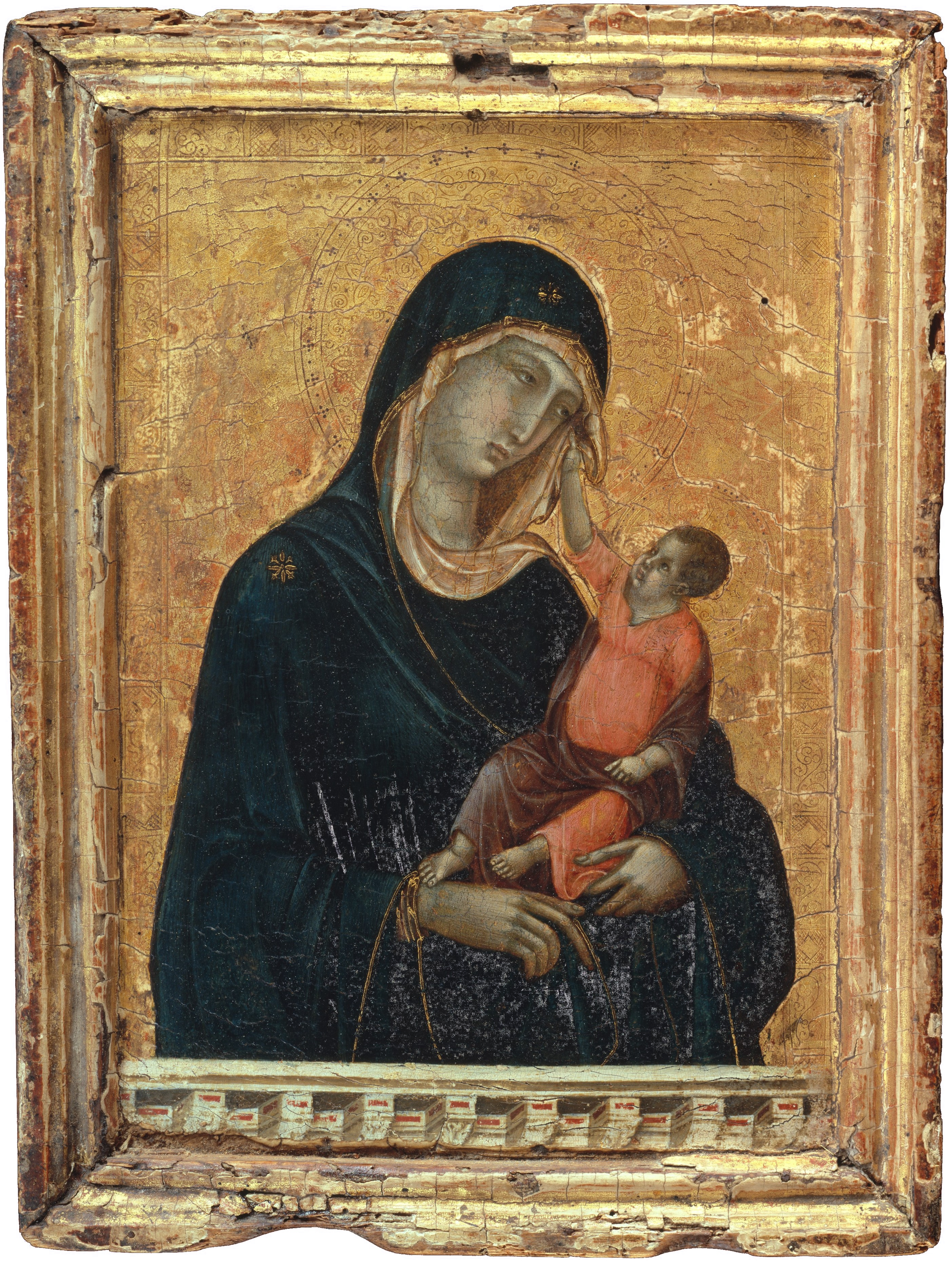
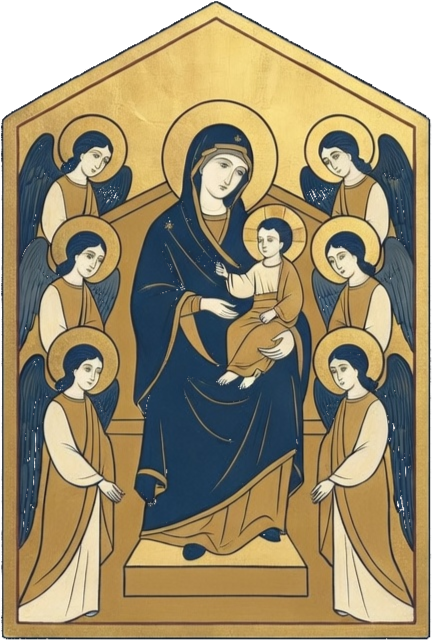
Duccio di Buoninsegna: Madonna with Child, c. 1300, wikimedia commons, Public domain
Defining the 'Gold-ground' aesthetic
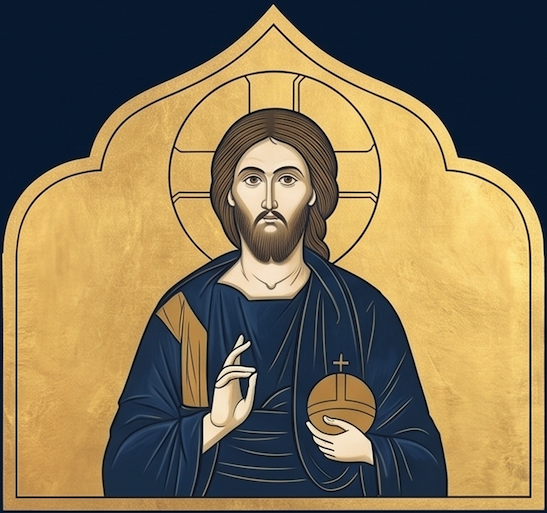
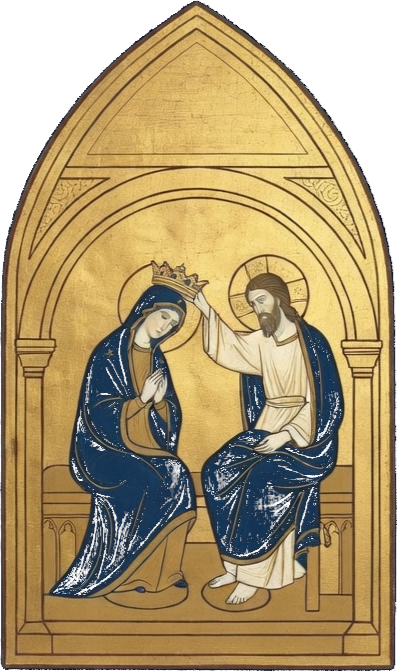
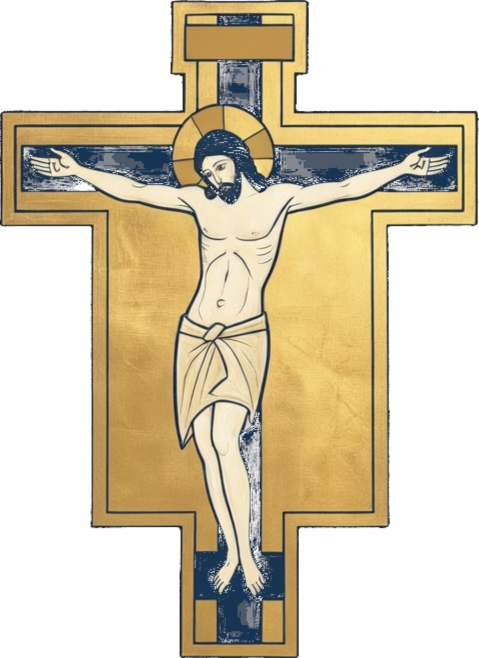
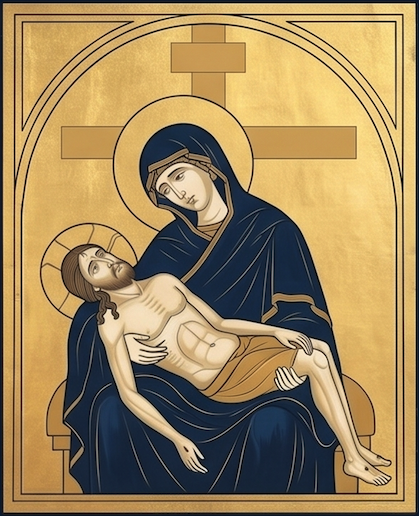
In a technical sense, a Gold-ground artwork includes any painting, mosaic, or manuscript illumination where the background is composed of gold leaf. While this tradition spans over 1,500 years, art historians primarily use the term to describe religious panel paintings produced between the mid-13th and early 15th centuries.
These works (paintings), typically feature the Virgin Mary, Christ with Angles or Saints set against a shimmering celestial backdrop (for more see common Subjects in paintings).

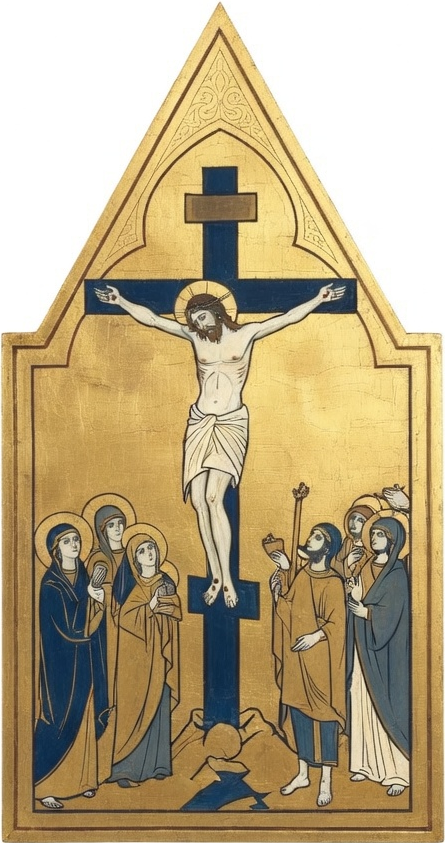
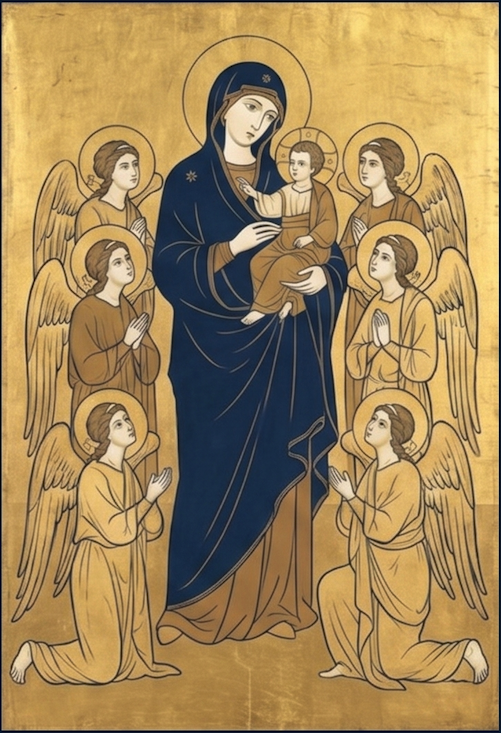
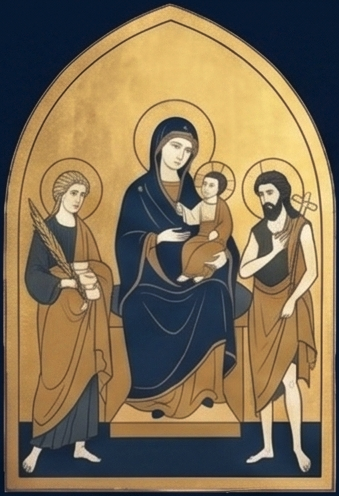
While examples exist from France, Spain, and Central Europe, the heart of this movement was Italy, specifically within the rival artistic powerhouses of Florence and Siena.
The Two Titans: Florence and Siena
The history of Central Italian painting during the Trecento and early Quattrocento is largely defined by the creative friction between two artistic superpowers: Florence and Siena. Though separated by only a few dozen miles, their approaches to the gold-ground panel represented two distinct philosophical worlds. If Florence was the school of form, Siena was the school of poetic elegance.
Form and function: From private devotion to grand altarpieces
Gold-ground works were created for diverse audiences and served various spiritual purposes:
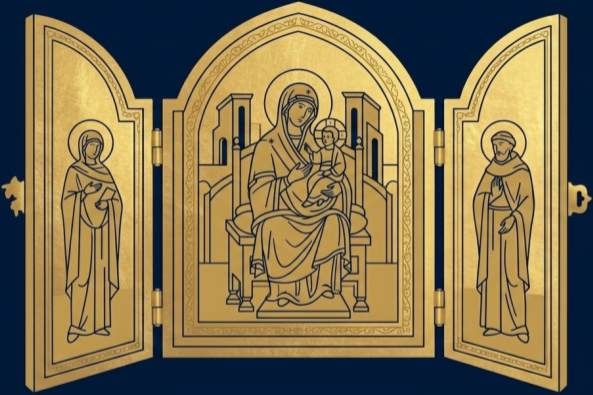
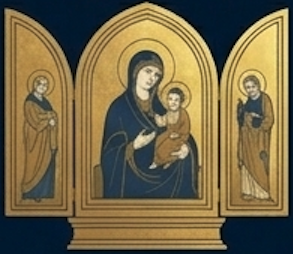
Small-Scale Devotion: Individual panels, often depicting the Hodegetria (the Virgin pointing toward Christ as the Savior), were used for private prayer. In Siena, these images were so revered that citizens offered them gifts to ward off plague and war.
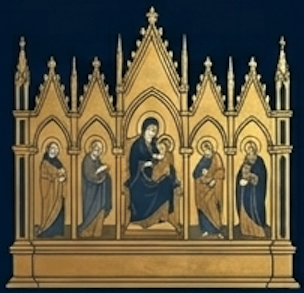
The Polyptych: Massive, multi-panel works could reach over 10 feet in height. Housed in architectural frames with Gothic pinnacles, these served as "didactic tools," using visual narratives to teach scripture to a largely illiterate public.
For more see common Objects.
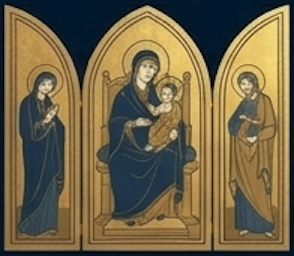
The alchemy of the workshop
Unlike the "lone genius" of later centuries, Gold-ground artists were viewed as highly skilled craftsmen working in specialized teams. The creation process was rigorous:
Preparation: A seasoned wood plank (usually poplar) was coated in gesso, a mixture of chalk and animal glue.
The Bole: Before gilding, a layer of reddish-brown clay called "bole" was applied. This acted as a primer, lending the gold a deep, warm tonality.
Gilding: Gold coins were hammered into incredibly thin sheets and applied with a brush. The surface was then burnished and punched with tiny holes—often in unique patterns—to create texture in haloes and borders.
Painting: The figures were added using egg tempera, a fast-drying mixture of pigment and egg yolk.
Masters of the Golden Age
While many artists remain anonymous and are identified only by their style (e.g., "The Master of the Baptistery of Parma"), several legendary figures emerged:
Cimabue: The Florentine forefather of the tradition.
Giotto& Duccio: The pivotal masters who introduced psychological depth and volume, breaking away from rigid Byzantine linearity.
The Heirs: Sienese masters like the Lorenzetti brothers and Simone Martini, alongside Florentines such as Bernardo Daddi and Orcagna.
The era eventually transitioned as the mid-15th century approached. The invention of linear perspective and the flexibility of oil paint—which allowed for glazes, impasto, and easier corrections—gradually replaced the static, golden "sacred stage" with the realistic space of the Renaissance.