
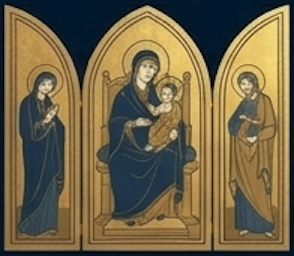
Schematic representation, generated with AI
Resources > Objects
Triptych
A Triptych (Italian: Trittico) is a specific form of altarpiece consisting of three hinged or fixed panels. In the evolution of Italian art between 1250 and 1430, the triptych occupied a unique middle ground between the singular "Painting" and the expansive "Polyptych". The triptych offered a more compact and often more intimate visual experience.
Structure and Versatility
The hallmark of the triptych is its tripartite division, which allowed for a sophisticated theological and visual hierarchy:
Central Panel: This was the focal point, typically featuring the Madonna and Child or a primary Christological scene like the Crucifixion.
Lateral Wings: Two flanking panels that usually depicted paired saints or narrative scenes. In many cases, these wings were hinged, allowing the object to be closed.
The "Closed" View: For portable or smaller triptychs, the exterior of the wings was often painted with simpler figures or heraldic shields, protecting the precious Gold Ground (fondo oro) and vibrant pigments inside when the object was not in use.
Function: From Altars to Private Chambers
Triptychs were highly adaptable during this period. Larger versions served as the primary altarpieces for side chapels in churches. However, smaller, portable triptychs became increasingly popular for private devotion. These "tabernacle" triptychs allowed wealthy patrons to carry a "sacred window" with them during travel or to maintain a personal prayer space within their homes, blending the monumental style of the church with a more personal scale.
Quantitative Aspects
Within the digital archive of the Fondazione Federico Zeri, the "Trittico" is classified as a complete, three-part unit. This distinction is important for researchers who often find only isolated wings that are categorized as individual panels.
According to the Zeri database, there are 246 registered objects classified as a trittico.
Wikipedia 🔗 - Grokipedia 🔗