
Research Corner
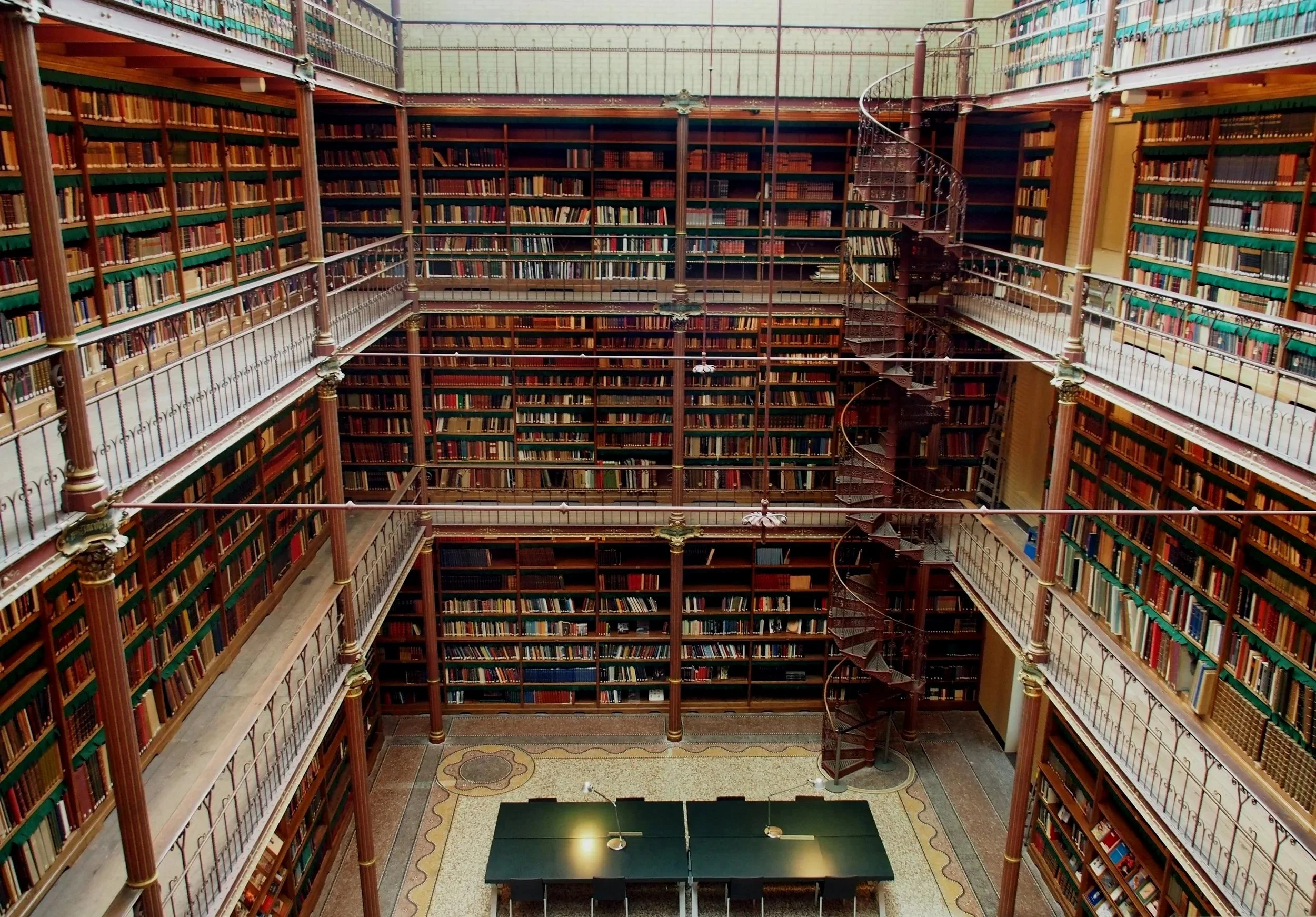
Photo credit header: Rijksmuseum Research Library, Wikimedia Commons (Creative-Commons)
Selected journals publishing research on this topic:
Fondo Oro Magazine is not a scientific journal. The Research Corner highlights papers relevant to the gold-ground tradition. Scholarship on this subject is scattered across disciplines — art history, conservation science, dendrochronology, theology, and more — which makes it hard to find work that is both relevant, interesting and genuinely readable. FOM tries to surface a selection of papers worth your attention.
A curated list of academic papers on Italian gold-ground panel painting from the Duecento, Trecento, and early Quattrocento.
Selected academic papers
-
Peaslee, Wallace; Wrapson, Lucy; Schönlieb, Carola-Bibiane
In Journal of Cultural Heritage, 72, 2025, 226–236, 🔓 Open access (repository.cam.ac.uk)
Abstract by Fondo Oro Magazine: In 14th- and 15th-century Italian gold ground paintings, artists used punch tools to create decorative impressions. Because these tools were frequently reused across workshops, classifying punch marks helps art historians track workshop practices and attribution—often using extensive reference indices compiled by Erling S. Skaug and Mojmír Frinta. In this paper, we explore automated punch mark classification using deep learning. While convolutional neural networks (CNNs) achieve high accuracy, they often struggle with unseen paintings due to small training datasets in cultural heritage. To address this, we evaluate domain generalization methods designed to improve performance on unseen target domains. We find that despite their theoretical promise, explicit domain generalization offers little advantage over standard CNN baselines. Ultimately, our results highlight both the limits of off-the-shelf deep learning for punch mark classification and the value of punch marks as a benchmark for domain generalization.
-
Maria Letizia Amadori, Valeria Mengacci, Mauro Sebastianelli, Bruno Pignataro, Simonpietro Agnello, Paolo Triolo and Claudia Pellerito
In Heritage, 2023, 6(6), 4692-4709, 🔓 Open access (MDPI) - LINK
Abstract by Fondo Oro Magazine: The Virgin Hodegetria in the Cathedral of Santa Maria Nuova in Monreale, near Palermo, is among the earliest surviving examples of medieval panel painting in Sicily, tentatively dated to the first half of the thirteenth century. A recent diagnostic campaign — combining non-invasive imaging techniques with micro-analytical methods — has shed new light on both its materials and its making. The results confirm a sophisticated execution firmly rooted in Italian painting tradition of the thirteenth and fourteenth centuries: a wooden support prepared with a double canvas layer, multiple gypsum grounds, and an underdrawing applied in carbonaceous black. The original palette comprised red ochre, red lead, azurite, and various blacks, while later restoration campaigns introduced mercury-based reds, indigo, smalt, and orpiment. The frame, originally covered in silver leaf and red tin-based lake, was subsequently regilded. Beyond its art-historical significance, the study offers a rare technical portrait of a Sicilian icon at the crossroads of Byzantine devotional tradition and Italian workshop practice.
-
MacLennan, Llewellyn, Delaney, Dooley, Schmidt Patterson, Szafran and Trentelman
In npj Heritage Science 7, Article number: 25 (2019), 🔓 Open access (nature.com) - LINK
Abstract by Fondo Oro Magazine: How big was a sheet of gold leaf? MA-XRF makes individual leaves visible — and turns them into evidence of place, period, and hand. X-rays are directed at the panel; every element struck responds with a faint signal of its own. Filtering for gold's signal alone yields a map of exactly where the metal lies — dense where two leaves overlap, thinner at the seams. Applied to fourteenth- and fifteenth-century panels from Florence, Siena, and Fabriano, the method yields measurements of leaf size and shape that are both accurate and repeatable. That opens a direct line to the documentary record. In 1403 the Florentine Arte dei Medici e Speziali reformed its statutes and fixed the dimensions of gold leaf beaten in the city. Comparing Florentine panels made before and after that date — and setting both against Sienese and Fabrianese work — shows a clear shift: Trecento leaves from Florence and Siena are squares of roughly 8 cm per side, while their Quattrocento counterparts measure closer to 7 cm. A second variable behaves quite differently. The overlap between adjacent leaves varies noticeably from artist to artist, yet stays consistent across a single artist's oeuvre. Size, in other words, appears to follow where and when a panel was gilded; overlap follows who did the gilding — the habit of an individual gilder, artist, or workshop.
-
MacLennan, Llewellyn, Delaney, Dooley, Schmidt Patterson, Szafran and Trentelman
In Renaissance Studies, Vol. 14, No. 1 (MARCH 2000), pp. 1-45 (45 pages), 🔒 Subscription (JSTOR) - LINK
Abstract by Fondo Oro Magazine: The Black Death of 1348 did not merely devastate Siena's population — it reshaped the very structure of its artistic life. This article examines a group of stylistically heterogeneous Sienese paintings from the 1350s and 1360s and argues that the disruptions of plague and economic crisis drove painters from different workshop traditions into new, loosely organised forms of collaboration. Analysing both stylistic and technical evidence, the author identifies an inter-workshop network — a compagnia — that served a protective economic function while simultaneously fostering a more synthetic pictorial idiom, distinct from the coherent workshop styles of the pre-plague generation. The study offers a fresh perspective on one of Italian art history's enduring questions: what happened to Sienese painting after the Black Death?
-
Polzer, Joseph
In Jahrbuch Der Berliner Museen, vol. 35, 1993, pp. 71–110., 🔓 Free online reading (JSTOR) - LINK
Abstract by Fondo Oro Magazine: Where does Pietro Lorenzetti truly come from? Challenging the long-held assumption that he derives from Duccio, Joseph Polzer traces his earliest artistic formation instead to the ambient of Memmo di Filippuccio. Through close analysis of his murals at Assisi and his panel production, Polzer reveals a remarkably complex early evolution — one that resists any simple linear reading and draws on a rich mixture of retrospective and contemporary influences. Chief among these is northern Gothic sculpture, absorbed both directly and through the mediating œuvre of Giovanni Pisano, which shaped Pietro's distinctive commitment to the realistic depiction of the human figure in structure, action, and behaviour — a commitment that set him apart from every other Sienese painter of his generation.
-
Hoeninger, Cathleen
In Journal of the American Institute for Conservation JAIC 1991, Volume 30, Number 2, Article 1 (pp. 115 to 124), 🔓 Open access (cool.culturalheritage.org)
Abstract by Fondo Oro Magazine: To the naked eye, ultramarine and azurite can look almost identical — but on color infrared film, the two blues split apart into distinct, unmistakable hues. This technique made it possible to survey a group of thirteenth- and fourteenth-century Sienese panel paintings for their blue pigments, including works by Guido da Siena, Duccio, Simone Martini, the Lorenzetti brothers, and several later Trecento masters. The study follows two threads: the relative use of ultramarine and azurite across three generations of Sienese panel painters (c. 1260–1345), and the confident handling of ultramarine's full range of grades by the later Trecento masters. Both findings are read against the aesthetic and economic value placed on the two pigments in the late medieval and early Renaissance period — ultramarine was prized above azurite for its tonal richness, but it was also far more costly, and painters used it accordingly, with care.
-
David J. DeLaura
Publications of the Modern Language Association PMLA 95:3 (1980), 367–388 , 🔒 Subscription (Cambridge) - LINK
Abstract by Fondo Oro Magazine: In 1836 the neo-Catholic writer Alexis-François Rio argued that the spiritual idealism of medieval painting had been destroyed in the fifteenth century by an advancing paganism and naturalism — a thesis that drew the line of artistic decline precisely where the gold-ground tradition ends. DeLaura traces how fiercely that claim was argued in Britain through the 1840s, and how Robert Browning answered it twice: in "Pictor Ignotus," which rejects Rio's defence of the painters before Raphael at the cost of seriously distorting the historical record, and in "Fra Lippo Lippi," whose famous sensualism turns out to be only one strand of an unsettled position. Charles Kingsley's counter-formulation of a Protestant realism, itself a direct response to Rio's asceticism, stands between the two poems and shapes Browning's more complicated views of the 1850s. Because Browning was making a case rather than writing history, he handled the facts freely — which explains both the iconoclasm and the conventionality of the poems. For readers of early Italian painting, the article is a reminder that the nineteenth-century revaluation of the period was never a neutral rediscovery: it was a confessional argument, fought over the fifteenth century as its boundary line.
-
Brink, Joel
In RACAR: revue d'art canadienne / Canadian Art Review, Vol. 4, No. 2 (1977), pp. 69-77 (9 pages), 🔓 Free online reading (JSTOR) - LINK
Abstract by Fondo Oro Magazine: What hidden order governs the great Tuscan altarpieces of the late Duecento and early Trecento? In this focused structural study, Joel Brink argues that the monumental gabled retables of Duccio, Cimabue, and Giotto — produced in Tuscany between approximately 1280 and 1310 — share a coherent geometric design system rooted in the sides and diagonals of the square and the generation of root rectangles. Analysing the carpentry proportions comparatively across several closely related works, he identifies a consistent pattern of incommensurable ratios that precedes the application of gesso, gold, and paint entirely. The luminous surfaces we admire were, it turns out, laid onto an armature already alive with mathematical intention.