
Resources > Masters
Duccio di Buoninsegna
c. 1255 in Siena; † 1318/19 in Siena - 13th–14th century - Duecento - Trecento - Sienese School
Duccio di Buoninsegna — known simply as Duccio — was an Italian painter from Siena during the Late Middle Ages, working at the meeting point of the Byzantine and Gothic traditions. His fellow citizens left a vivid contemporary testimony of his standing: when his great Maestà was carried from his workshop to Siena Cathedral on 9 June 1311, an anonymous chronicler recorded that the shops were shut, the bells rang, and the whole city — clergy, officials and people with lighted candles — accompanied the panel in procession. On its frame Duccio inscribed a prayer that doubles as a signature: "Holy Mother of God, be the cause of peace for Siena, and of life for Duccio, because he painted you thus."
That panel is why Duccio is called the father of Sienese painting. Where Giotto's revolution in Florence was one of weight, volume and space, Duccio's was one of line, colour and feeling: he took the gold-ground solemnity of the Byzantine icon and infused it with Gothic grace, tenderness of gesture, and a jeweller's refinement of surface. The path that runs from Duccio through Simone Martini and the Lorenzetti brothers to the International Gothic style across Europe begins here.
Life
Duccio was born in Siena around 1255–1260. He is first documented in 1278, painting wooden covers for the account books of the commune, and the archives track him for four decades — often through fines, for debts, for declining military service, and for other infractions that hint at an unruly character. In 1285 the Compagnia dei Laudesi of Santa Maria Novella in Florence commissioned from him a great Madonna, the Rucellai Madonna, a remarkable honour for a Sienese painter in Cimabue's city; for centuries the panel was attributed to Cimabue himself. Duccio also supplied the design for the great round window of Siena Cathedral's choir (1287–88). He died in 1318 or early 1319, apparently in debt: his heirs renounced the inheritance. He left a wife, Taviana, and seven children.
Style and innovation
Duccio's achievement was to humanize the icon. He kept the gold grounds, the hieratic frontality and the burnished splendour of the maniera greca, but softened its rigidity: drapery flows in long calligraphic curves, faces incline toward one another with tenderness, and colour — rose, lapis, gold — is orchestrated with a subtlety no contemporary matched. In his narrative scenes he proved himself one of the great storytellers of European art, setting complex episodes in convincing architecture and landscape and giving each figure a legible emotional role. His art is less sculptural than Giotto's, but its lyricism and chromatic refinement defined an alternative path for Western painting.
Major works
The Maestà of Siena Cathedral
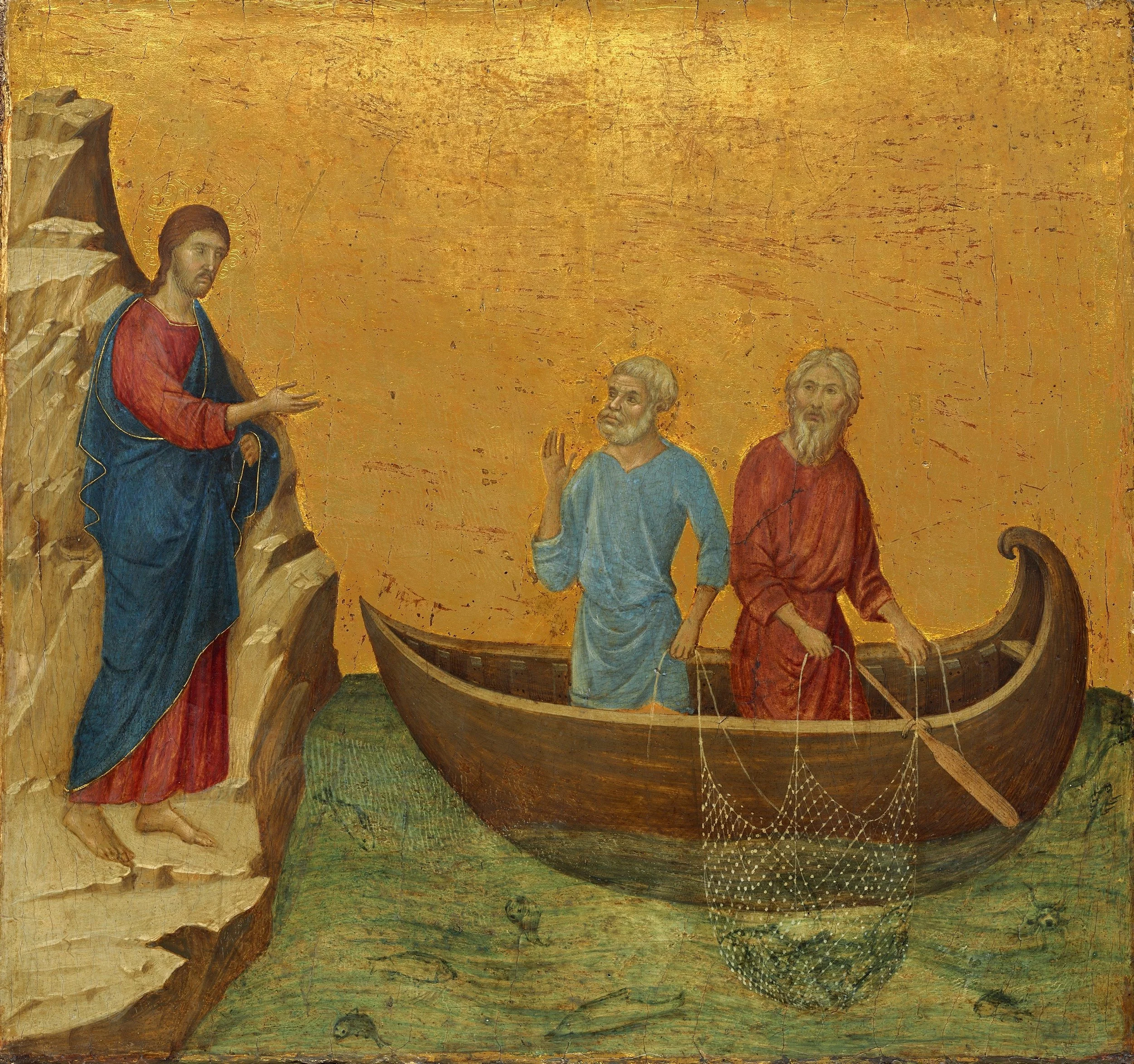
Duccio's masterpiece is the Maestà, commissioned on 9 October 1308 for the high altar of Siena Cathedral and installed with civic celebration on 9 June 1311. Painted on both sides, it showed the Virgin and Child enthroned amid ranks of angels and saints facing the congregation, and, on the back, some forty smaller scenes of the Passion of Christ and the lives of Christ and the Virgin. Dismembered in the eighteenth century, its main body is now in the Museo dell'Opera del Duomo in Siena, while dispersed panels are held by the National Gallery in London, the National Gallery of Art in Washington, the Frick Collection, the Kimbell Art Museum and the Thyssen-Bornemisza. It is one of the supreme achievements of medieval painting.
The Rucellai Madonna
Painted after the 1285 contract for Santa Maria Novella in Florence and now in the Uffizi, the Rucellai Madonna is the largest surviving thirteenth-century panel painting. The enthroned Virgin, borne by six kneeling angels against gold, hangs today in the same room as Cimabue's Santa Trinita Maestà and Giotto's Ognissanti Madonna — the classic three-way comparison of the founders of Italian painting.
Early Madonnas
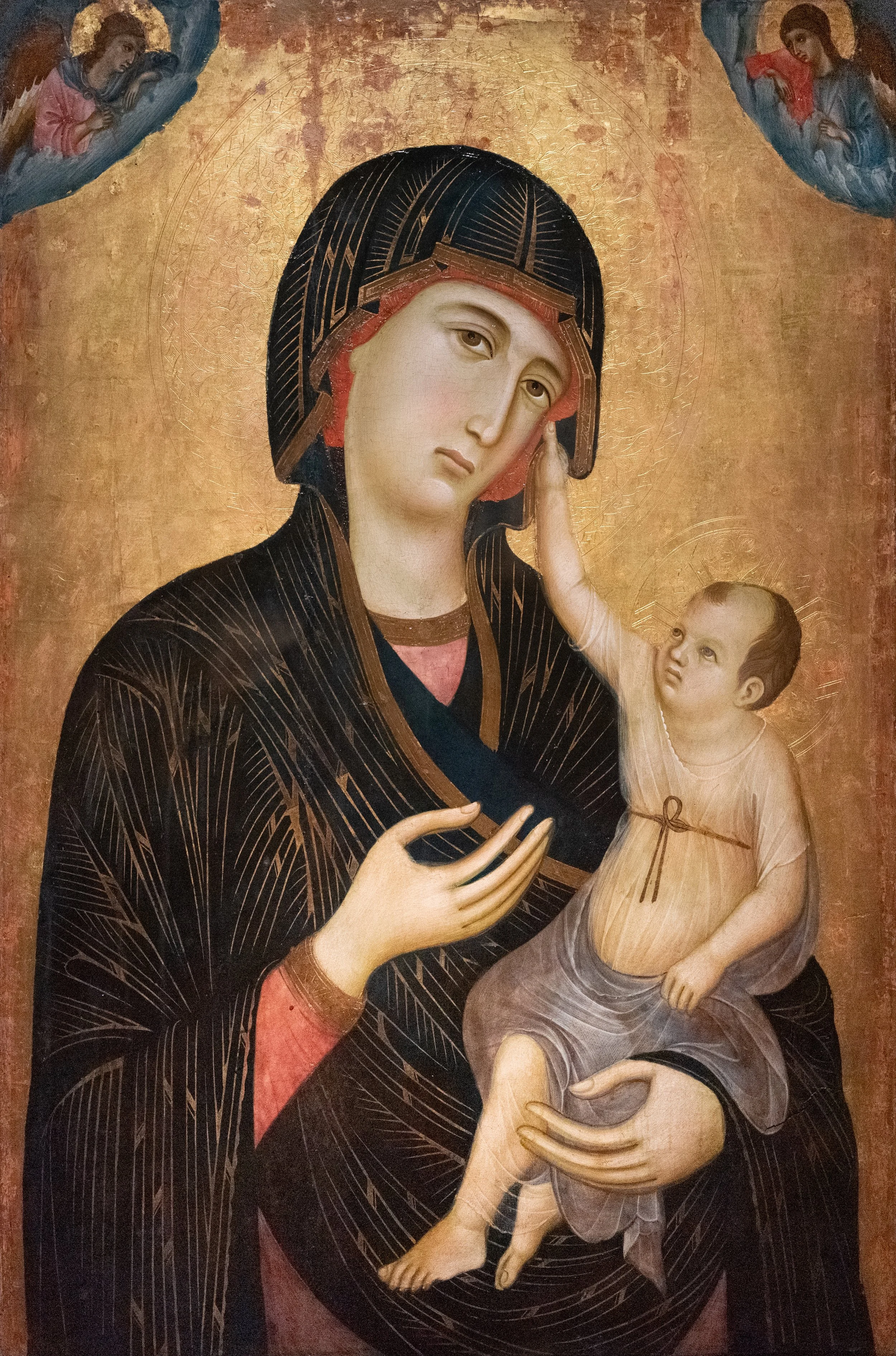
The Crevole Madonna (Museo dell'Opera del Duomo, Siena) and the Madonna of the Franciscans (Pinacoteca Nazionale, Siena) show Duccio's early transformation of Byzantine models, the latter a tiny panel of astonishing delicacy.
The Stoclet Madonna
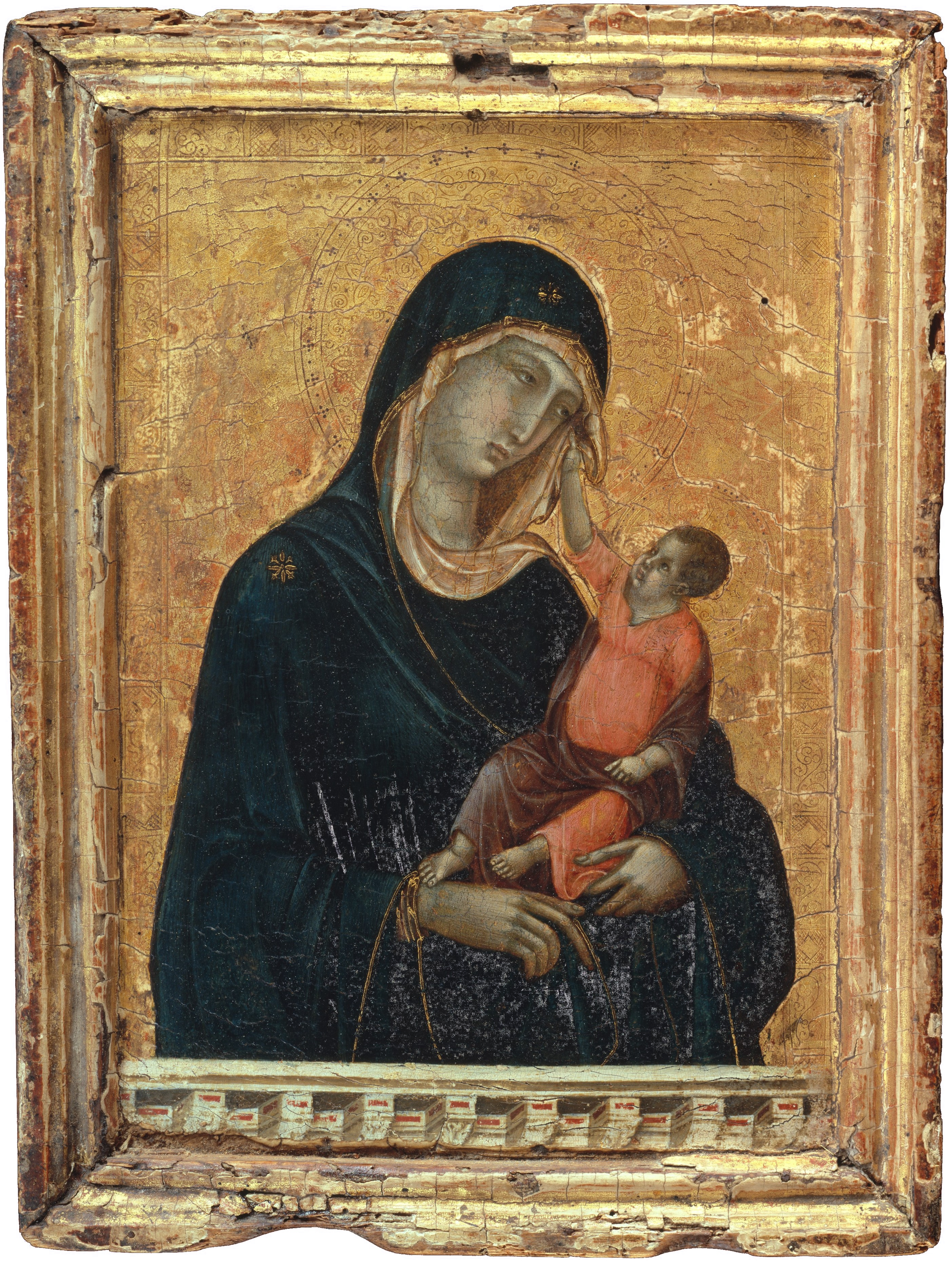
The small Madonna and Child once in the Stoclet collection was acquired by the Metropolitan Museum of Art in 2004 for a sum reported around $45 million, then the museum's most expensive purchase. Its parapet motif — a ledge connecting the sacred figures to the viewer's space — is often cited as a quiet step toward Renaissance illusionism.
Legacy
Duccio founded the Sienese school: Simone Martini and Pietro and Ambrogio Lorenzetti emerged from his orbit, and through them his lyrical line ran into Gothic painting across Europe. The blockbuster exhibition "Siena: The Rise of Painting, 1300–1350" (Metropolitan Museum of Art and National Gallery, London, 2024–25) reunited dispersed Maestà panels and reaffirmed his stature. The Fondazione Federico Zeri maintains the most comprehensive database for Italian art of this era; there are 66 works catalogued under Duccio di Buoninsegna and can be found: online catalogue 🔗.
Wikipedia 🔗 - Grokipedia 🔗 - Wikimedia Commons 🔗
Selected works

Publication
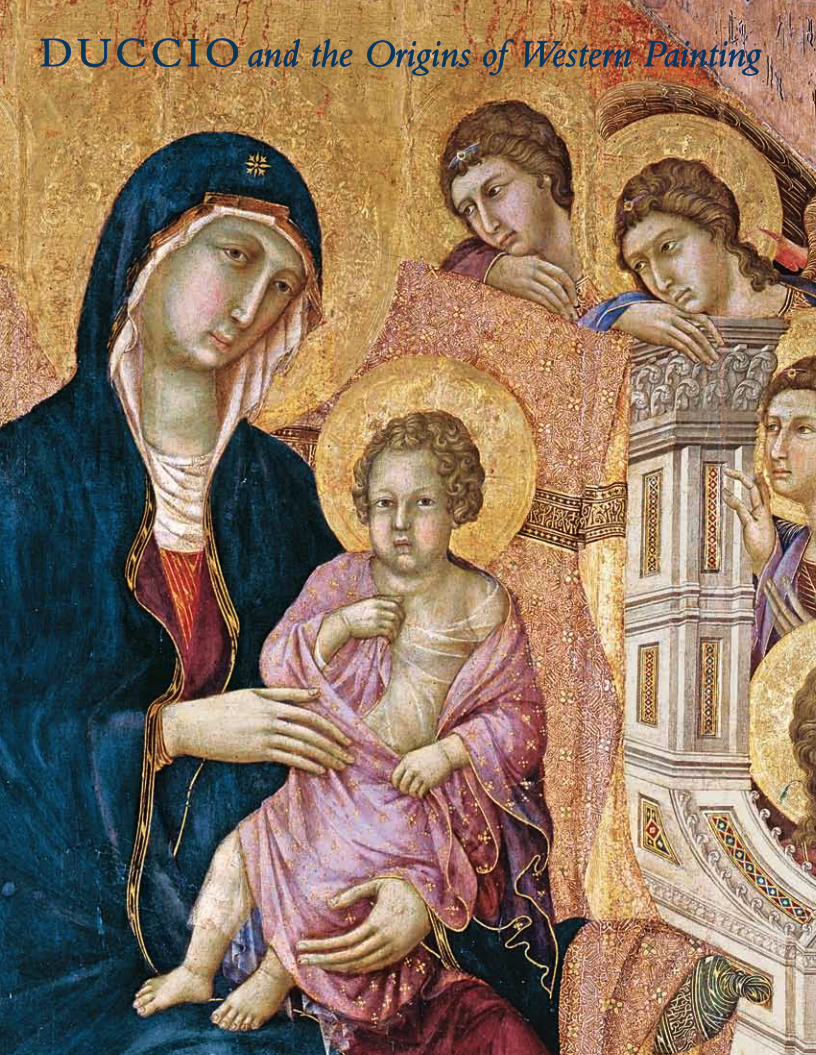
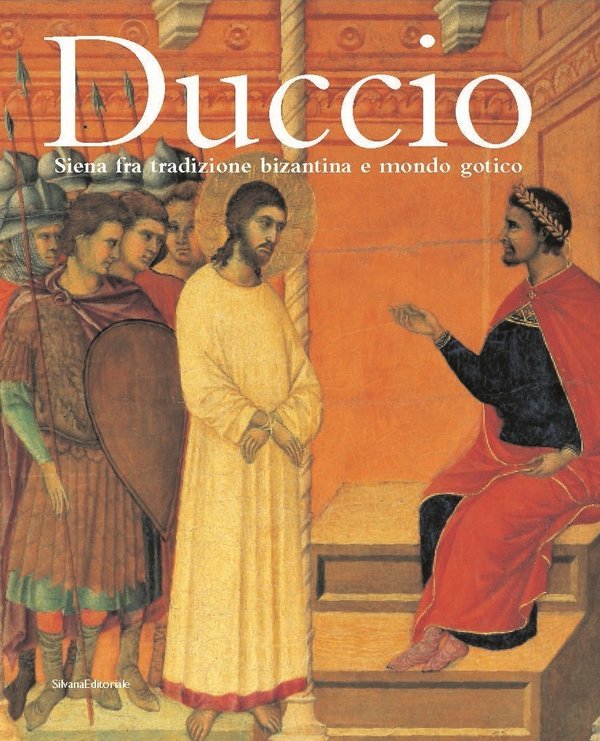
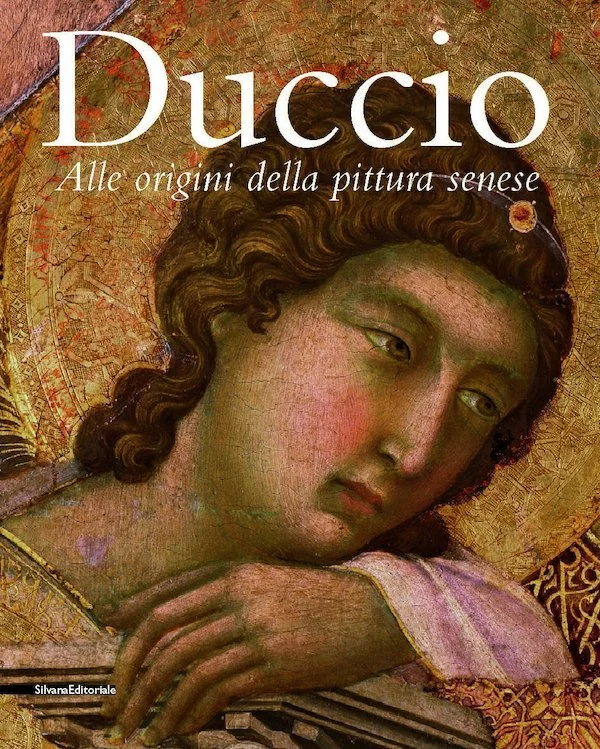
Photo credits
Duccio di Buoninsegna: Madonna with Child, c. 1300, Wikimedia Commons (Public domain)
Duccio di Buoninsegna: The Raising of Lazarus, 1310-1311, Wikimedia Commons (Public domain)
Duccio di Buoninsegna: The Calling of the Apostles Peter and Andrew, 1308, Wikimedia Commons (Public domain)
Duccio di Buoninsegna: Crevole Madonna, 1283, Wikimedia Commons (Public domain)