
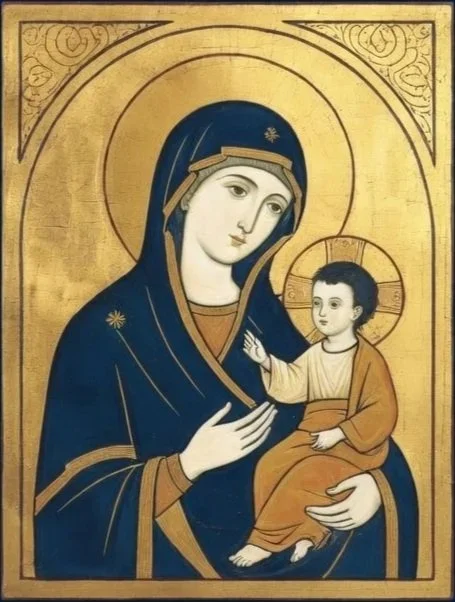
Schematic representation, generated with AI
Resources > Recurring depictions
Madonna con Bambino
The Madonna con Bambino (Madonna/Virgin with Child) represents the most intimate and enduring archetype within the Italian Fondo Oro tradition. If the Cristo crocifisso depicts the climax of the Christian narrative, the Madonna con Bambino serves as its foundation - the mystery of the Incarnation rendered in tempera and gold leaf.
Madonna con Bambino is by far the most represented subject in Italian gold-ground painting between 1250 and 1430 - a dominance confirmed by the vast photographic catalogue of the Federico Zeri Foundation.
The image draws from two Byzantine archetypes: the Hodegetria, in which the Virgin solemnly presents the Christ Child as the way to salvation, and the Eleusa, where mother and child touch cheek to cheek in tender compassion. Against the radiant gold ground — real beaten leaf, burnished over red clay, signifying not a sky but eternity itself — these figures exist outside of time and history.
From the hieratic rigidity of Cimabue to the emerging humanity of Duccio and Giotto, the Madonna con Bambino was the arena in which Italian painting slowly transformed.
Wikipedia 🔗 - Grokipedia 🔗
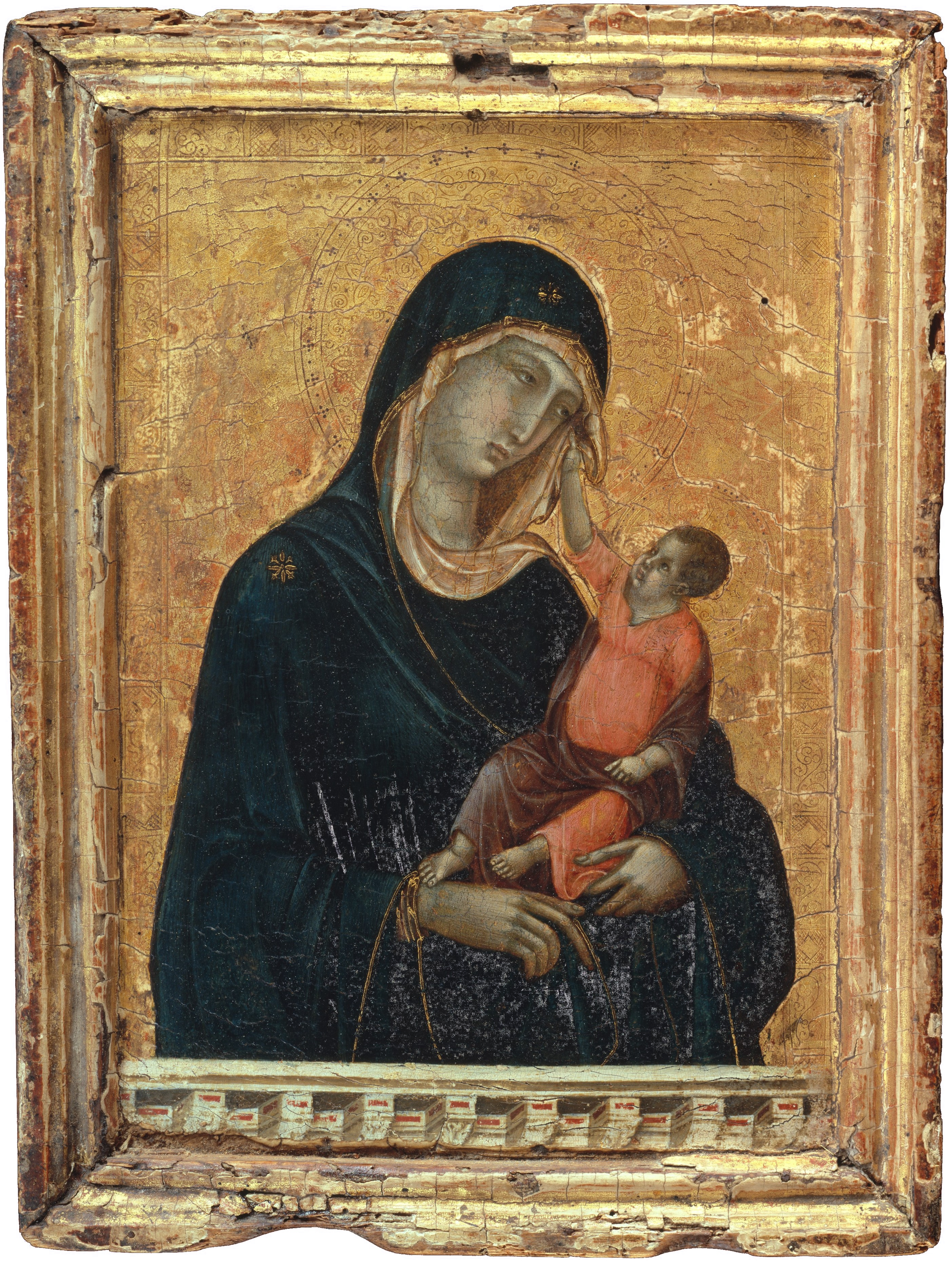
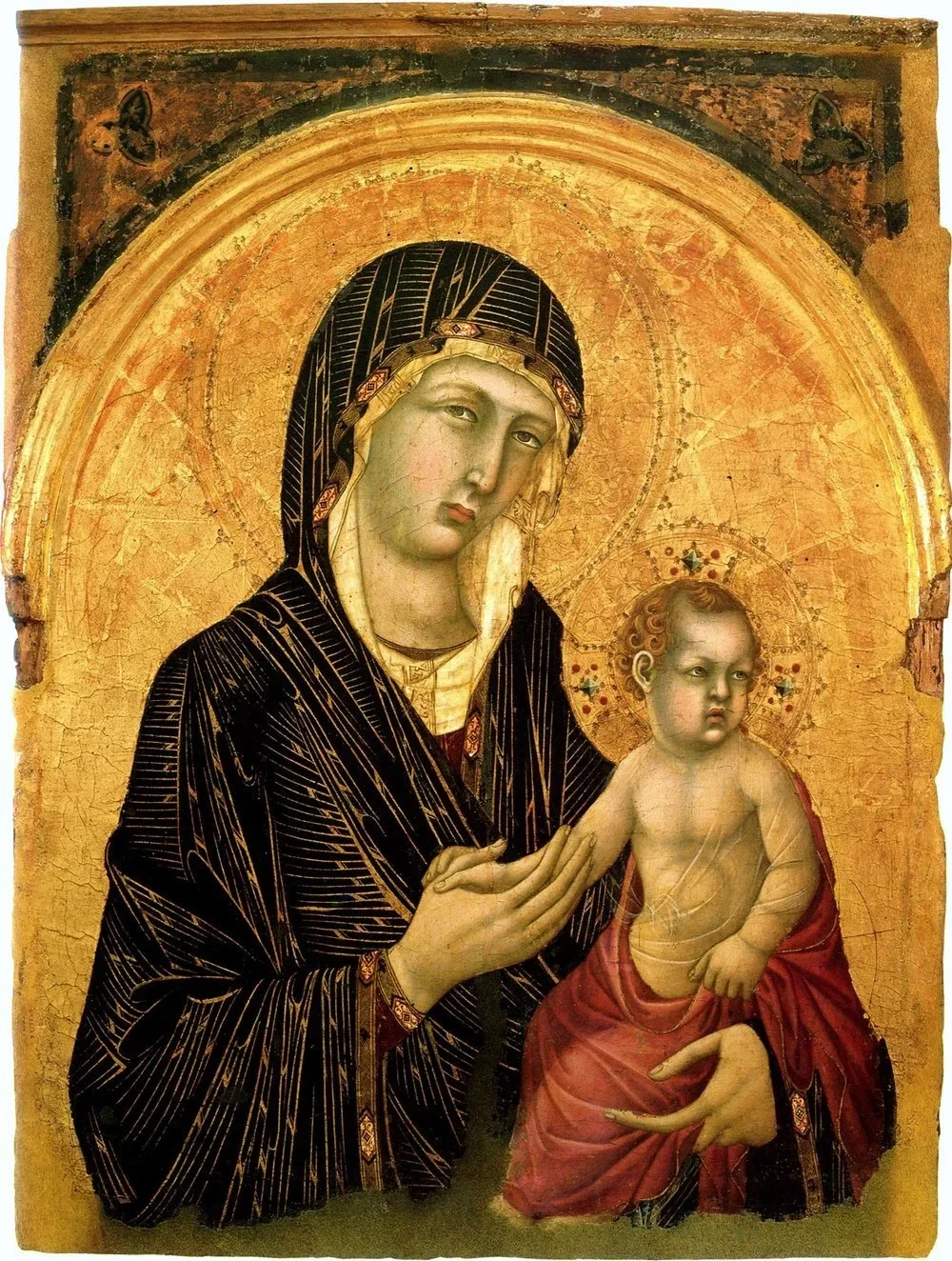
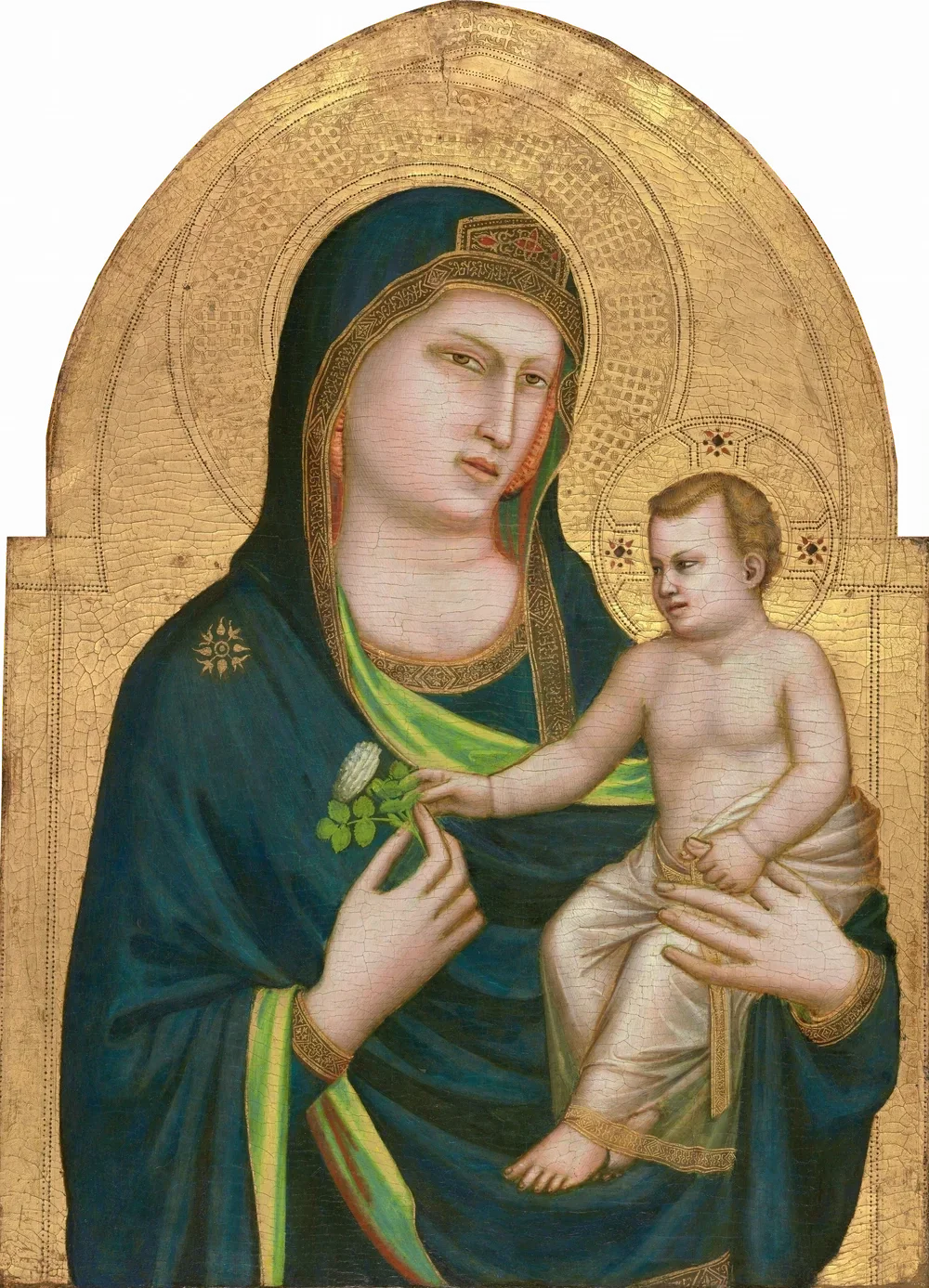
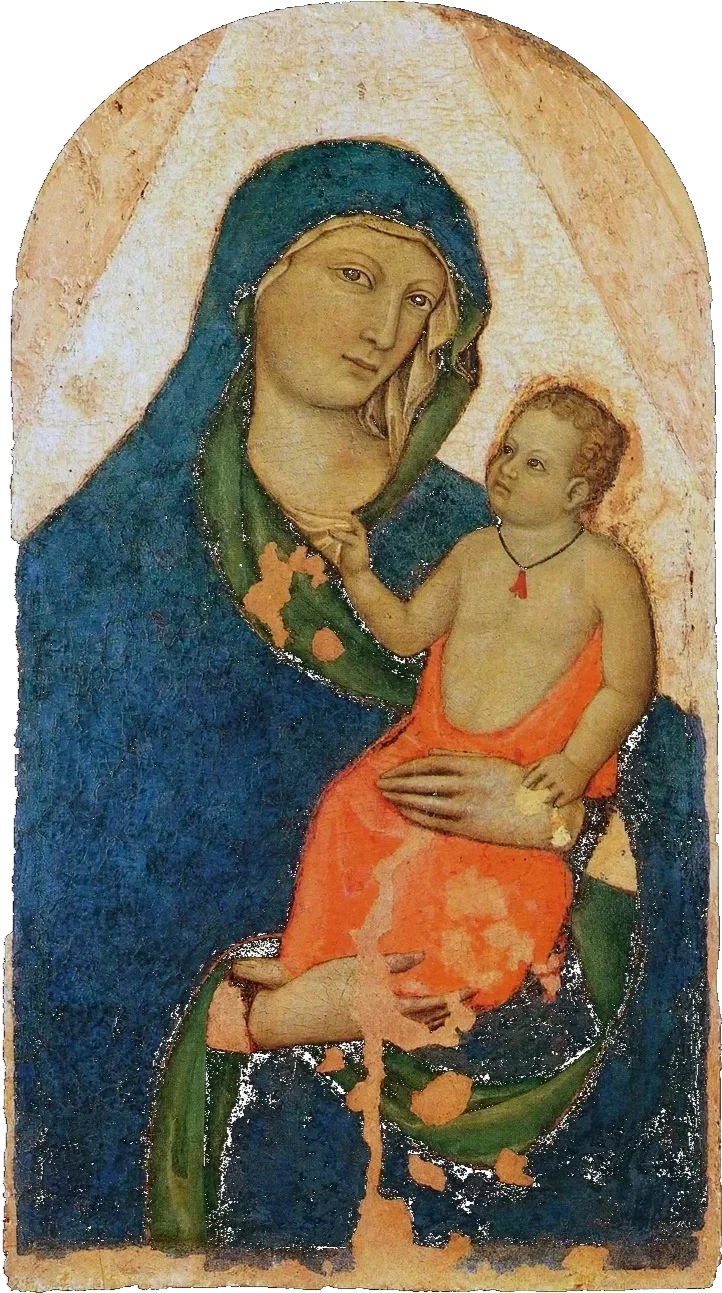
Photo credits
Duccio di Buoninsegna: Madonna with Child, c. 1300, Wikimedia Commons (Public domain)
Simone Martini: Madonna and Child, c. 1308-1310, Wikimedia Commons (Public domain)
Giotto: Madonna with Child, c. 1320-1330, Wikimedia Commons (Public domain)
Jacopo del Casentino: Madonna with Child, Wikimedia Commons (Public domain)