
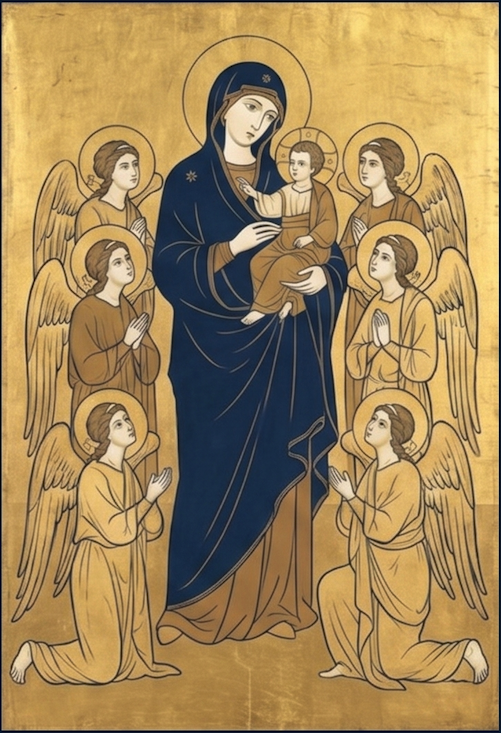
Schematic representation, generated with AI
Resources > Recurring depictions
Madonna con Bambino e angeli
The Madonna con Bambino e angeli (Madonna and Child with Angels) represents a delicate synthesis of maternal intimacy and celestial glory. If the Madonna in trono emphasizes the Virgin’s sovereign authority, the presence of the angelic host around the standing or half-length Virgin creates a shared space between the human and the divine—a moment of earthly tenderness witnessed by the inhabitants of the heavenly spheres.
This configuration reflects the diversifying devotional landscape of Italy between 1250 and 1430, appearing frequently in both private devotional tabernacles and as lateral components of larger complex structures, a prevalence well-documented in the photographic archives of the Federico Zeri Foundation.
Iconographically, the angels serve as a "celestial frame", their presence elevating the maternal bond into a supernatural event. In these gold-ground panels, the angels often emerge from the edges or hover in the upper registers, their colorful wings and refined features providing a rhythmic counterpoint to the radiant gold leaf. Against this ground of luce divina, the angels act as intermediaries, directing the viewer’s prayer toward the central mystery while signifying that the scene exists within the eternal liturgy of Paradise.
The stylistic journey of this subject follows the transition from the repetitive, solemn angelic choirs of the 13th century to the more individualized and emotive spirits of the 14th century. From the stern, protective guardians found in the circle of Cimabue to the lyrical, whispering attendants of the Sienese masters, the Madonna con Bambino e angeli captures the evolving Italian effort to give human warmth to the inhabitants of the celestial realm.
Wikipedia 🔗 - Grokipedia 🔗

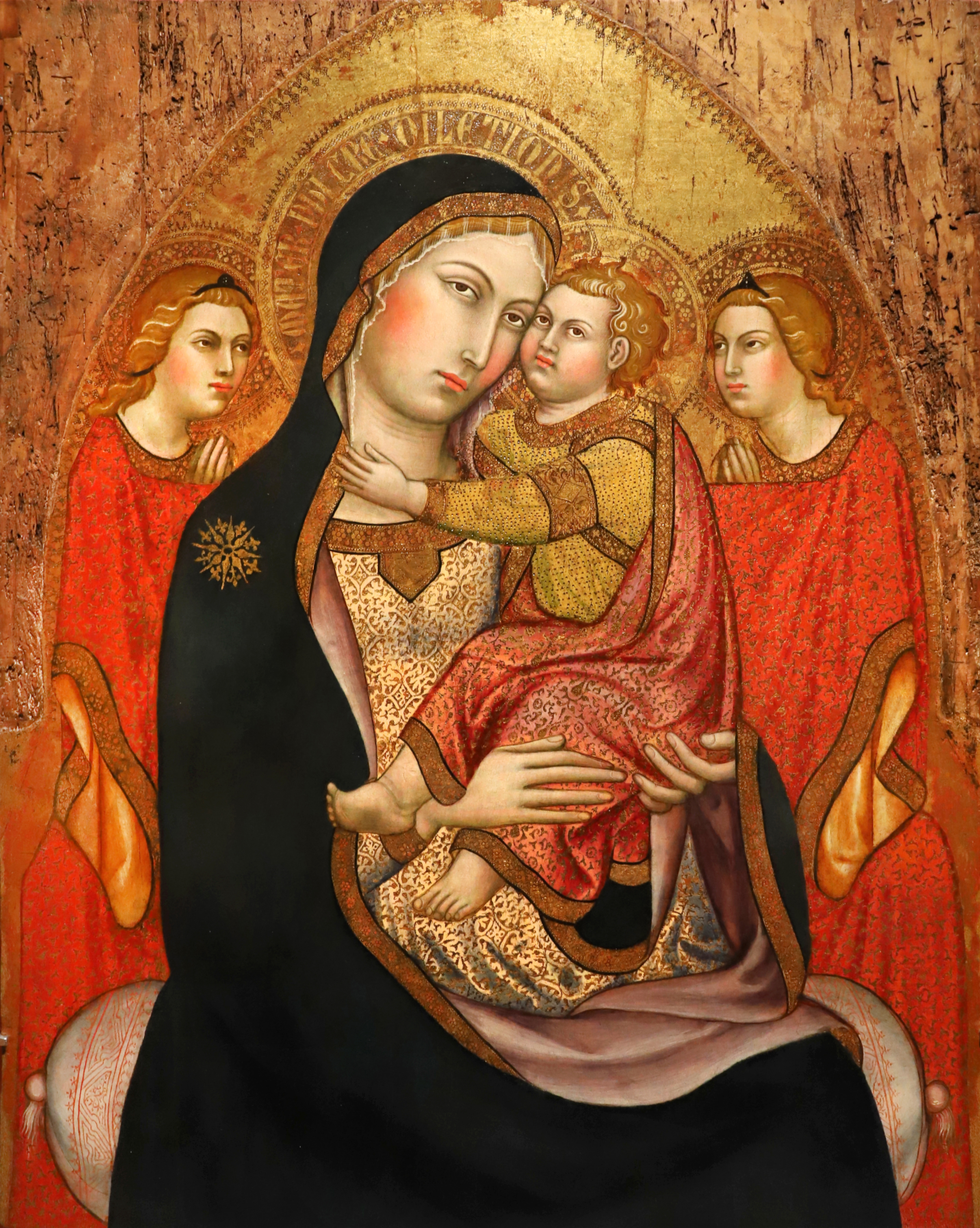
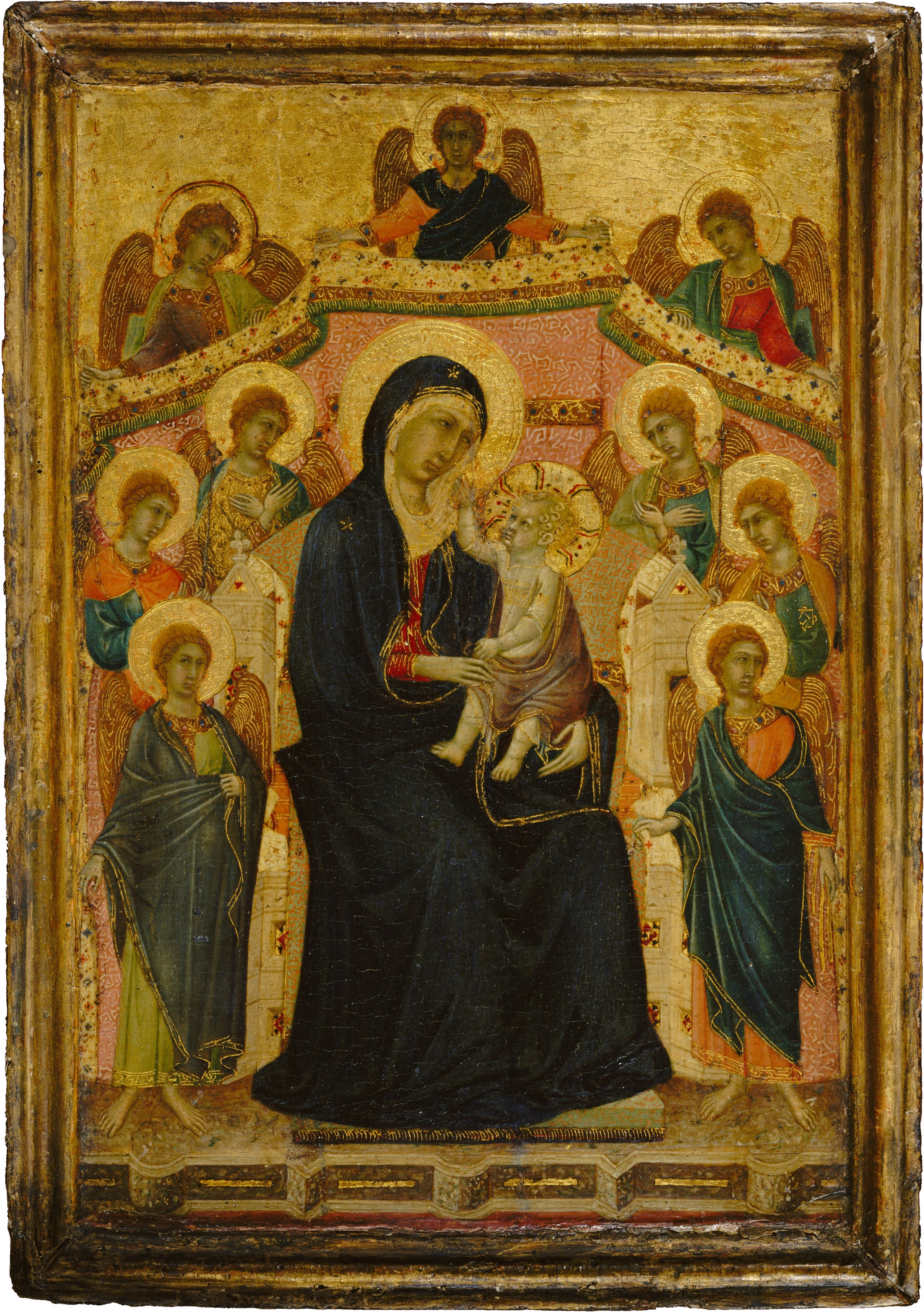
Photo credits
Lorenzo di Bicci: Madonna and Child with Angles, Wikimedia Commons (Public domain)
Taddeo di Bartolo: Madonna with Child and two angles, c. 1411-1413, Wikimedia Commons, Creative Commons Attribution 3.0 Unported
Segna di Bonaventura : Madonna and Child with Nine Angels, 1315, Wikimedia Commons, Creative Commons CC0 1.0 Universal Public Domain Dedication