
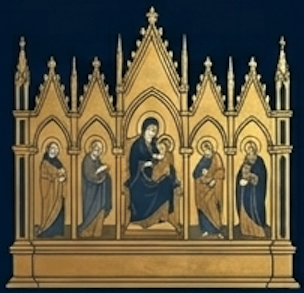
Schematic representation, generated with AI
Resources > Objects
Polyptych
A Polyptych (Italian: Polittico) (Greek: poly- "many" and ptychē "fold") is a large-scale religious altarpiece consisting of more than three individual panels joined together. In the context of Italian art between 1250 and 1430, the polyptych was the most sophisticated and prestigious form of church decoration. Historically, polyptychs typically displayed one "central" or "main" panel that was usually the largest; the other panels are called "side" panels, or if hinged, "wings". Unlike the single "Polyptych panel", which represents just one fragment, a "Polyptych" refers to the entire, unified architectural and artistic ensemble.
Structure and Artistic Ensemble
The polyptych was designed to be more than just a painting; it was an architectural structure, often mimicking the Gothic windows and portals of the cathedrals they inhabited. A complete polyptych typically integrated several distinct elements:
The Main Tier: A series of panels featuring the central sacred figure (the Coronation or Madonna) flanked by standing saints in lateral compartments.
The Superstructure: Upper tiers consisting of pinnacles and cymatia, often featuring half-length figures of prophets or the Annunciation.
The Base (predella): A horizontal strip at the bottom containing narrative scenes that provided a biographical "foundation" for the figures above.
The Frame: Elaborate, gilded woodcarvings—often including pilasters, gables, and crockets—that physically and symbolically bound the individual panels into a single heavenly vision.
Liturgical and Devotional Role
As the centerpiece of the altar, the polyptych functioned as a visual manifestation of the celestial hierarchy. The use of the Gold Ground (fondo oro) transformed the church interior, reflecting candlelight to create a shimmering, otherworldly space. These works were intended to be permanent, monumental fixtures that guided the liturgy and visualized the complex theological programs commissioned by religious orders or wealthy patrons.
Quantitative Aspects
In the cataloging system of the Fondazione Federico Zeri, the classification "polittico" (Polyptych) is reserved for objects that have remained substantially intact or have been successfully reconstructed by art historians.
According to the Zeri archive, there are 277 registered objects identified as a complete Polyptych. This number is significantly lower than the count for "Polyptych panels" (788), which underscores a harsh reality of art history: the majority of these massive structures were dismantled over the centuries. Finding a complete polittico is a rarity, making these 277 records vital for understanding the original, intended scale of Italian medieval and early Renaissance devotion.
Wikipedia 🔗 - Grokipedia 🔗