
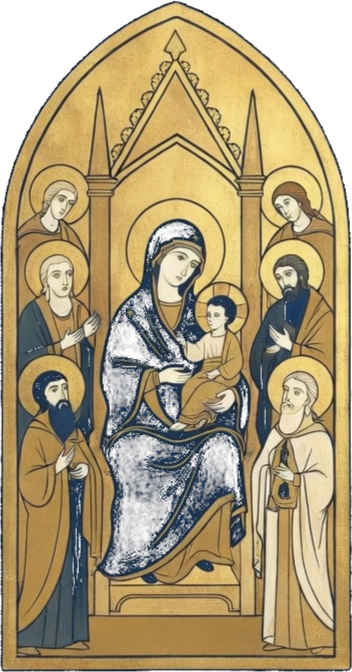
Schematic representation, generated with AI
Resources > Objects
Polyptych panel
A Polyptych panel (Italian: scomparto di polittico) is an individual section or compartment of a larger multi-paneled altarpiece (a Polyptych), which was the most prominent form of religious painting in Italy between roughly 1250 and 1450.
These objects are quintessential artifacts of the Gold Ground (fondo oro) tradition.
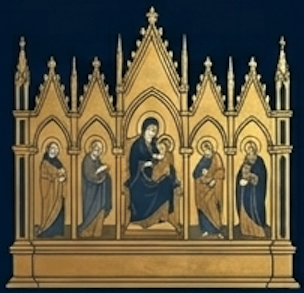
Schematic representation of a Polyptych
Structure
A polyptych was a complex architectural and liturgical structure. A single "polyptych panel" could have occupied several positions within this ensemble:
Central Panel: Usually the largest, depicting the primary subject such as the Madonna and Child Enthroned or the Coronation of the Virgin.
Lateral Panels (Wings): Flanking the center, these usually depicted standing saints or apostles related to the church’s dedication or the patron.
Predella Panels: Small, horizontal narrative scenes located at the base of the altarpiece, often illustrating the lives of the saints depicted above.
Pinnacles and Cymatium: Triangular or arched upper elements, often featuring half-length figures of prophets, angels, or the Annunciation.
Quantitative aspects
In modern art history and digital cataloging—specifically within the Fondazione Federico Zeri database—the term "scomparto di polittico" is the standard classification used to identify these isolated fragments as part of a (often lost) complex whole. According to the Zeri archive, there are 788 registered objects categorized under this specific typology Polyptych panel in the field of Italian gold ground paintings.
Wikipedia 🔗 - Grokipedia 🔗