
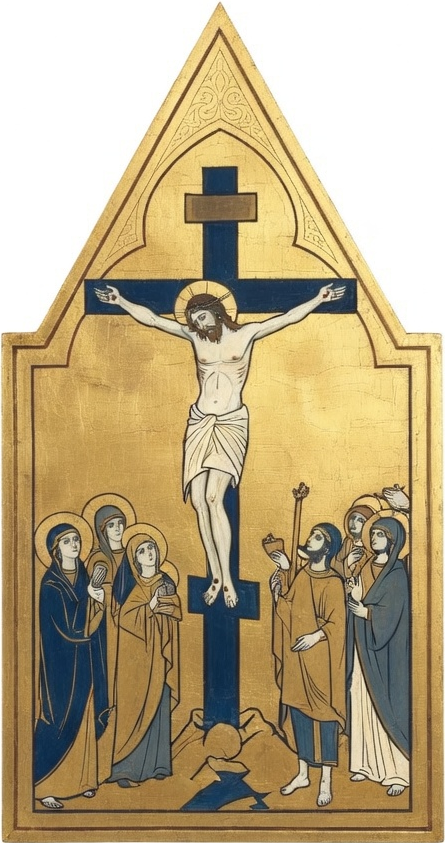
Schematic representation, generated with AI
Resources > Recurring depictions
Crocifissione di Cristo
The Crucifixion of Christ (Italian: Crocifissione di Cristo) represents the dramatic and theological summit of the Italian Fondo Oro tradition. If the Madonna con Bambino manifests the mystery of the Incarnation, the Crocifissione depicts its sacrificial fulfillment—the weight of human salvation transfigured through tempera and precious metal.
The Crucifixion stands as the most vital narrative focal point in Italian gold-ground painting between 1250 and 1430, serving as the essential centerpiece for polyptychs and processional crosses alike—a prevalence meticulously documented within the photographic archives of the Federico Zeri Foundation.
The iconography is defined by two transformative archetypes: the Christus Triumphans, the earlier Byzantine-influenced type where Christ appears alive and victorious over death with eyes wide open, and the Christus Patiens, which emerged through the influence of the Franciscan order to show a suffering, slumped figure with closed eyes, inviting the viewer into a state of shared empathy. Against the absolute stillness of the gold ground—the luce divina that replaces the physical horizon—the sacrifice is stripped of its historical setting and elevated into a perpetual, eternal present.
From the monumental, rhythmic agony of Cimabue’s crosses to the profound physical gravity and psychological depth introduced by Giotto, the Crocifissione was the primary vehicle through which Italian artists moved away from symbolic abstraction toward a harrowing, tactile realism.
Wikipedia 🔗 - Grokipedia 🔗
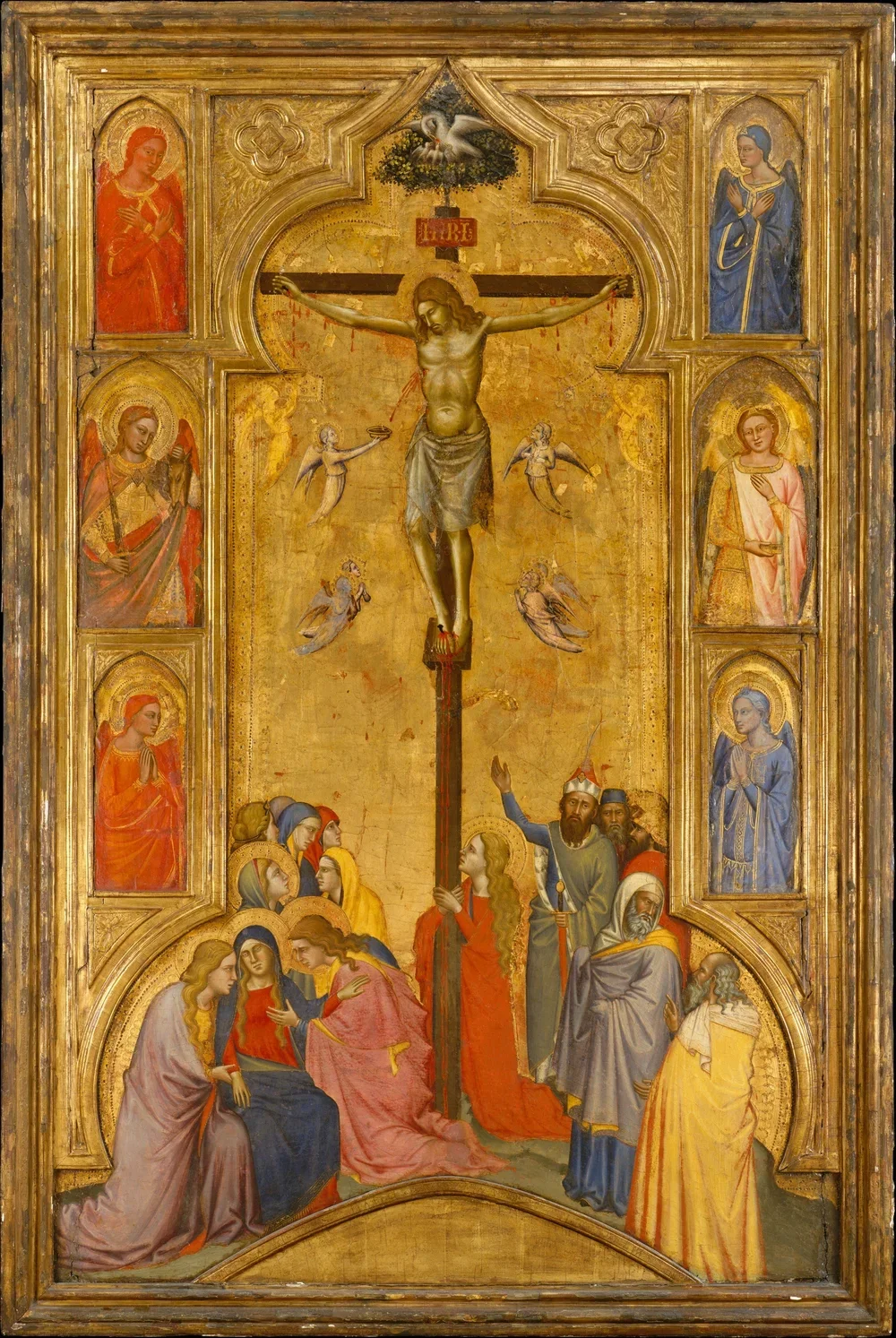
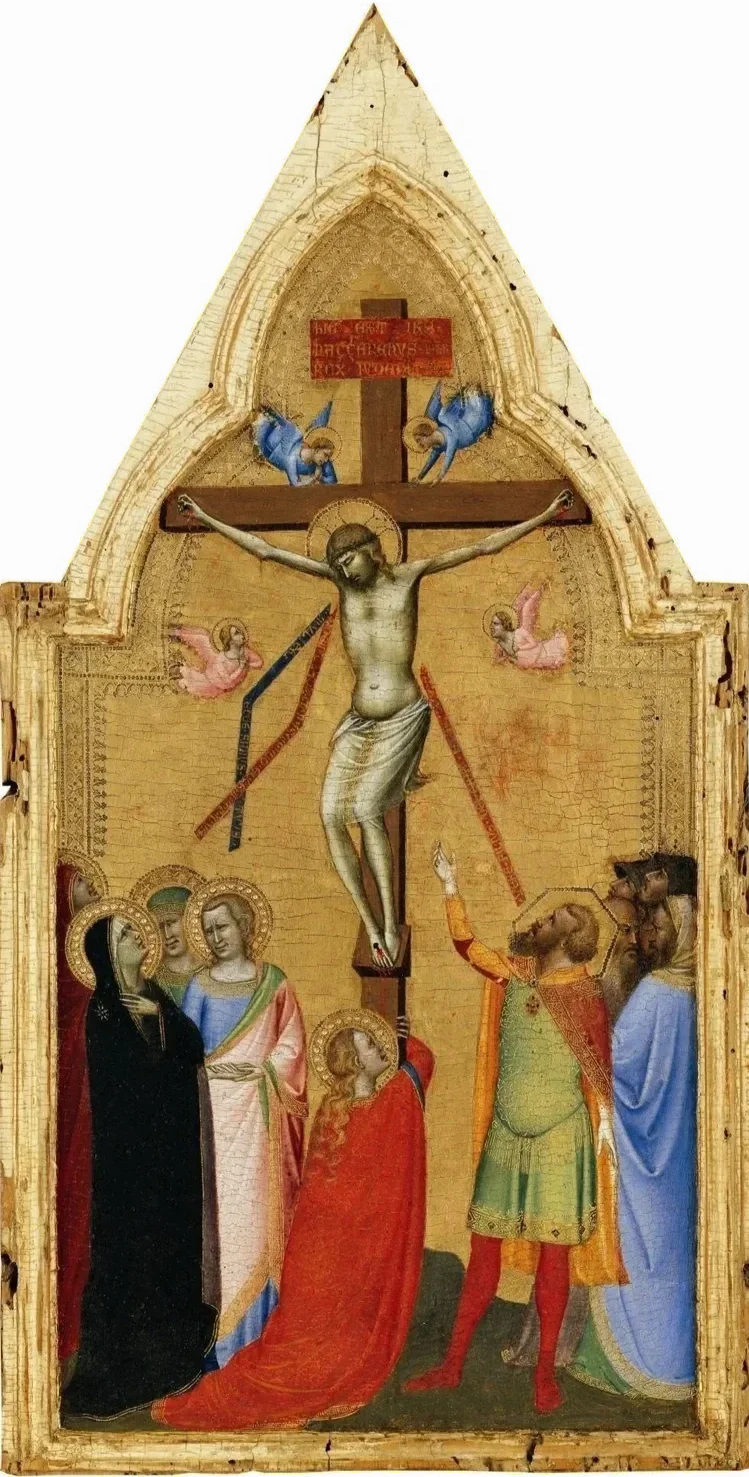
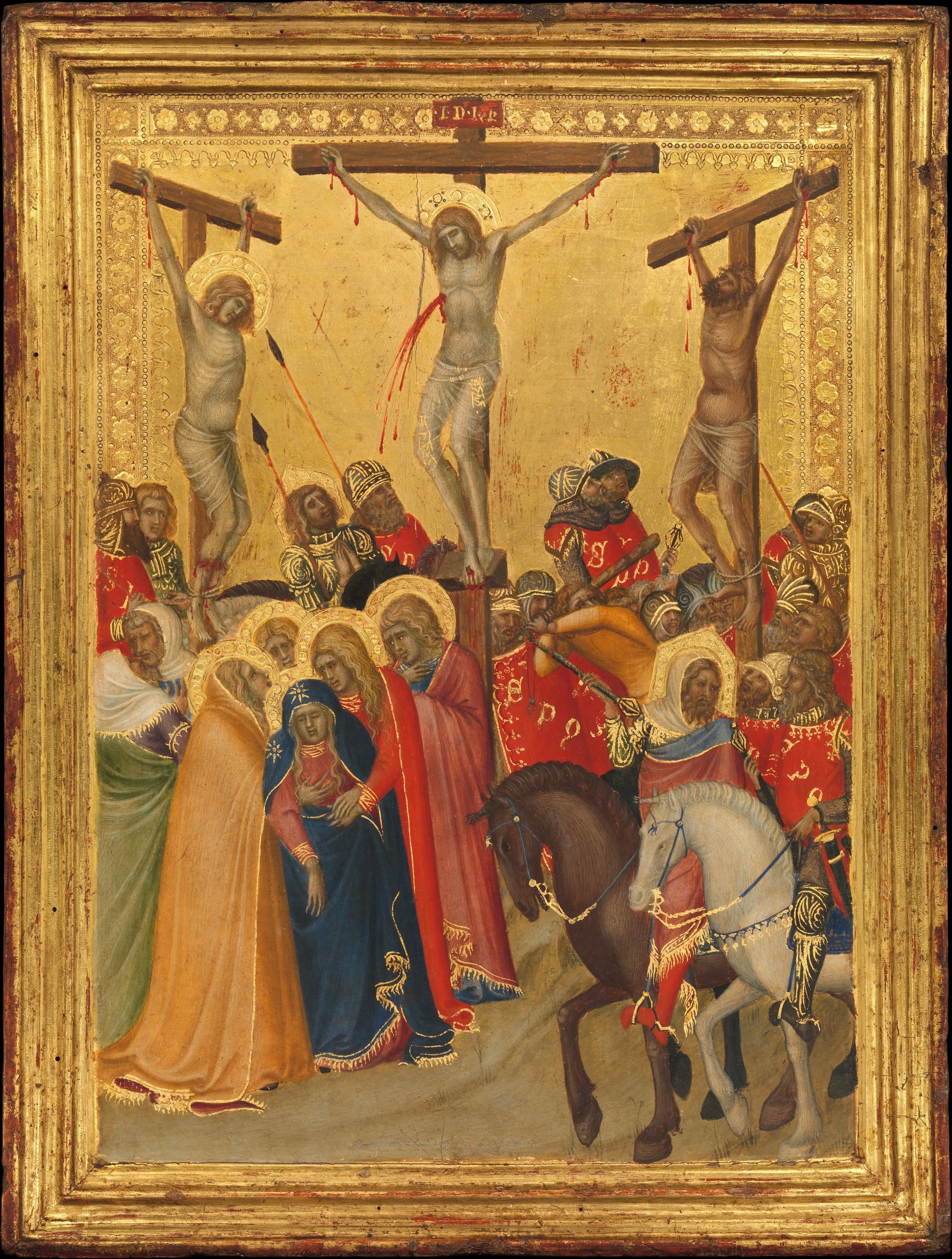
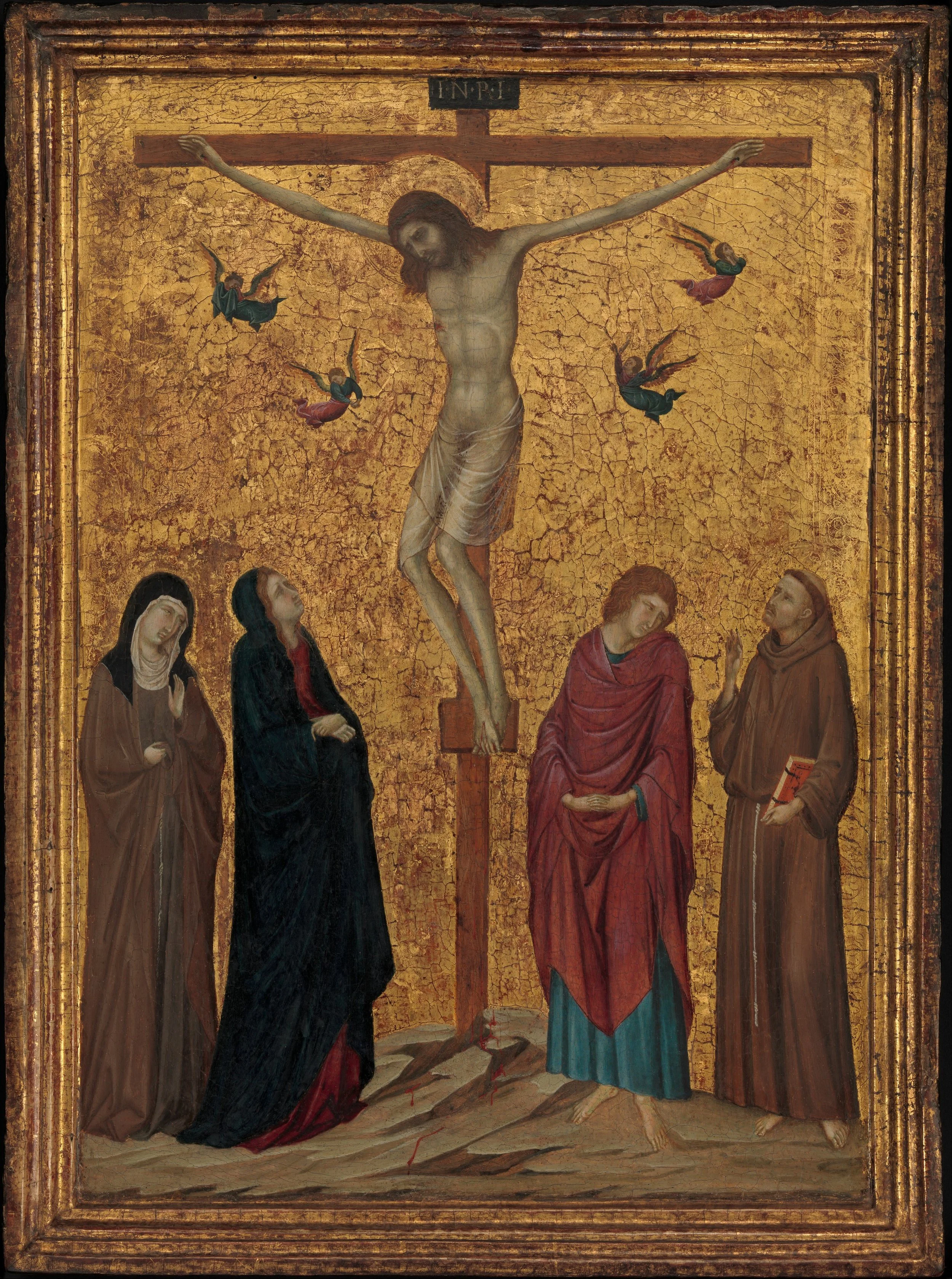
Photo credits
Andrea di Cione: The Crucifixion, c. 1365, Wikimedia Commons, Attribution: I, Sailko, Creative Commons Attribution-Share Alike 3.0 Unported
Bernardo Daddi: The Crucifixion, Wikimedia Commons (Public domain)
Pietro Lorenzetti: The Crucifixion, 1340s, Wikimedia Commons, Public domain / THE MET, NYC, USA
Ugolio da Siena: The Crucifixion, c. 1315–1320, Public Domain / THE MET, NYC, USA