
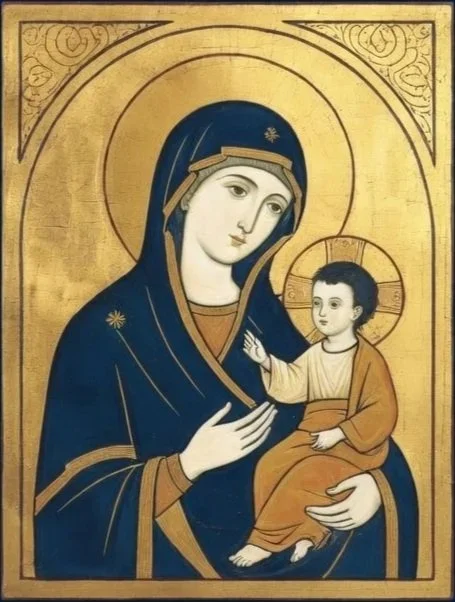
Schematic representation, generated with AI
Resources > Objects
Painting
A Painting (Italian: Dipinto) represents a fundamental category of Italian art produced between 1250 and 1450. While the term is broad, in the context of the Gold Ground (fondo oro) era, it specifically refers to autonomous or self-contained works on wood panels that were not intended as part of a complex, multi-paneled structure like the "Polyptych panel".
Typology and Function
Unlike individual fragments of a larger ensemble, a Dipinto often functioned as a standalone devotional object. These can be categorized by their intended use:
Independent Altarpieces (Pale): Large, single-panel paintings intended for an altar, often depicting the Maestà (Madonna in Majesty) or a specific sacred scene.
Private Devotional Panels: Smaller panels commissioned for domestic settings or private chapels, designed to aid in personal prayer and meditation.
Processional Banners and Crosses: Painted on both sides, these were used during religious festivals and liturgical processions.
Private purpose: Small, often portable paintings with closing shutters that protected the sacred image when not in use.
Materiality and Technique
The creation of a Dipinto during this period was a labor-intensive process involving:
The Support: Seasoned wood panels, typically poplar, prepared with layers of gesso (a mixture of animal glue and gypsum) to create a smooth, marble-like surface.
The Gold Ground: Application of bole (red clay) followed by wafer-thin gold leaf, which was then burnished to a mirror-like shine and often decorated with punchwork (stamping patterns into the gold).
The Paint: Pigments ground in an egg-yolk binder, applied in thin, precise strokes to build up color and form.
Quantitative aspects
Within the Fondazione Federico Zeri database—there are 3,660 registered objects classified as dipinto (Painting) within the Italian gold ground tradition (1250-1430).
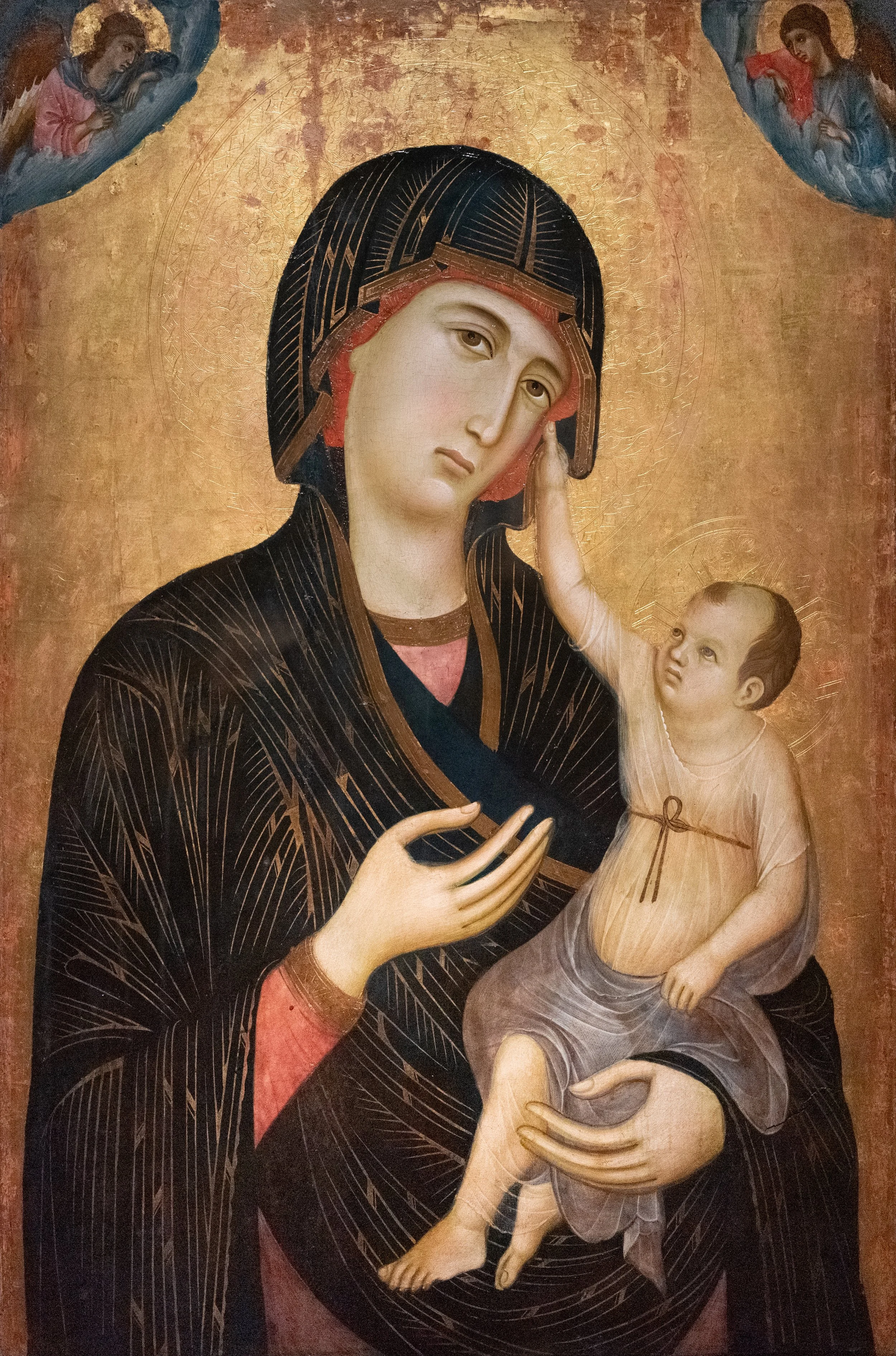
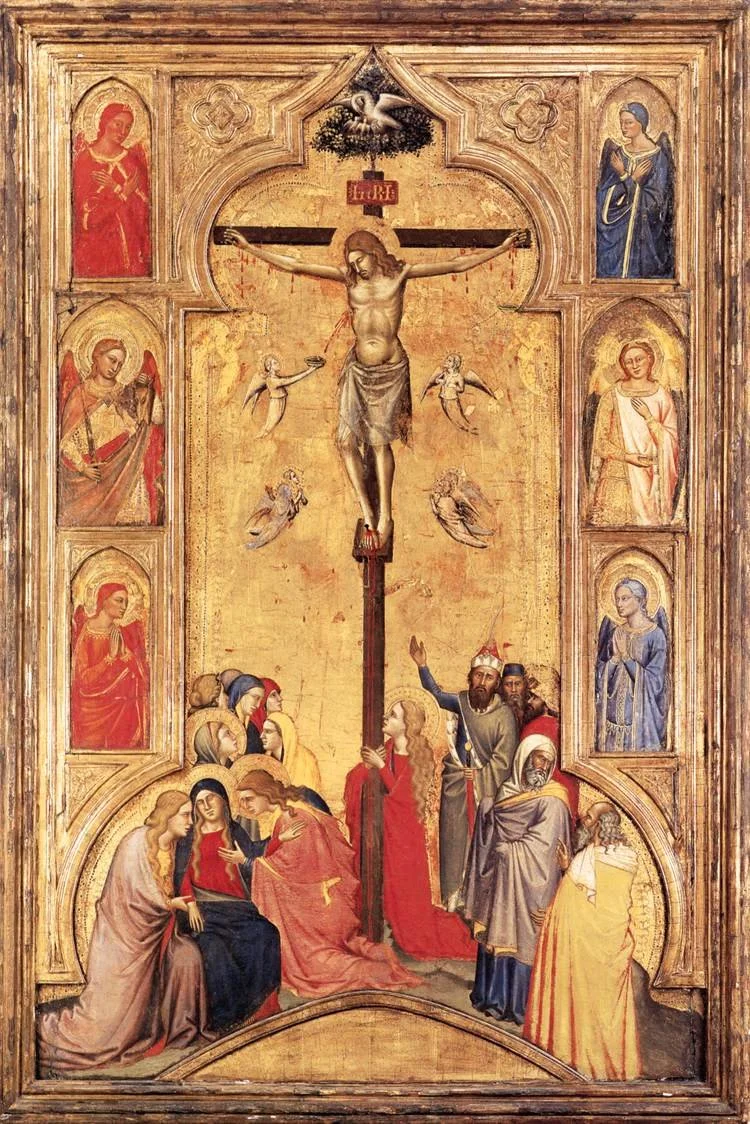
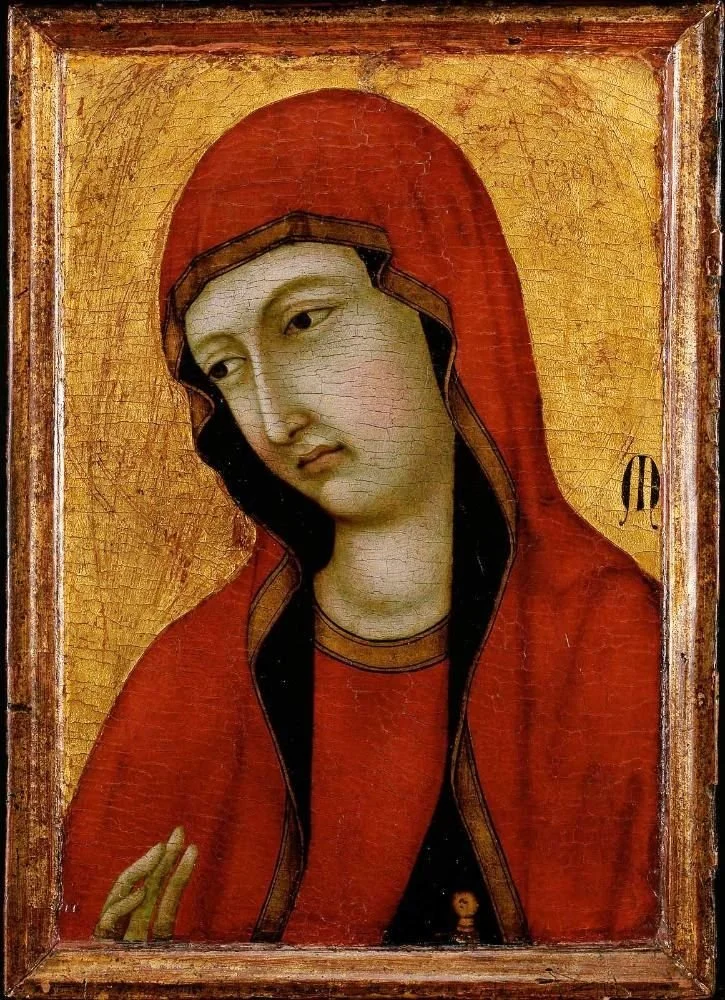

Photo credits
Duccio di Buoninsegna: Crevole Madonna, 1283, Wikimedia Commons (Public domain)
Andrea di Cione: The Crucifixion, c. 1365, Wikimedia Commons (Public domain)
Ugolino di Nerio: St. Mary Magdalen, c. 1320, Wikimedia Commons (Public domain)
Pietro Lorenzetti: The Crucifixion with the Virgin, and Saints Mary Magdalene, John the Evangelist and a Franciscan female saint, Wikimedia Commons (Public domain)