
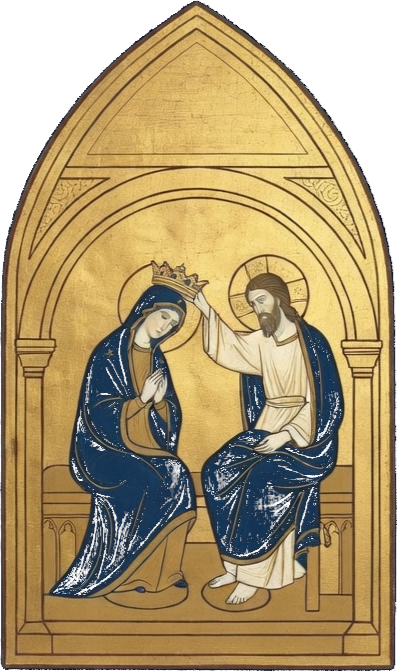
Schematic representation, generated with AI
Resources > Recurring depictions
Incoronazione di Maria Vergine
The Incoronazione di Maria Vergine (Coronation of the Virgin) represents the triumphant and celestial culmination of the Italian Fondo Oro tradition. It depicts the moment when Christ crowns his Mother as Queen of Heaven, an iconographic subject that embodies the ultimate glorification of the Virgin and the completion of her divine mission.
This composition became one of the most prestigious and frequently chosen themes for the central panel of large polyptychs and high altarpieces between the 13th and 15th centuries. As the visual climax of the Marian cycle, it occupied the most sacred and visible position above the altar, serving as a radiant focal point for liturgical celebration and communal devotion. It forms a significant chapter in the photographic archives of the Federico Zeri Foundation, where numerous variations document the evolution of this majestic theme across different regional schools.
The iconography follows a precise and solemn hierarchy: Christ, usually seated to the right, places a crown upon the bowed or kneeling head of the Virgin, who is often dressed in a rich blue mantle. Surrounding them are choirs of angels playing musical instruments, seraphim, and frequently saints or apostles as witnesses. Against the infinite golden expanse — symbolizing the luminous eternity of the Heavenly Jerusalem — the scene radiates divine light and perfect harmony. The coronation gesture transforms Mary from the humble handmaid into the Regina Coeli, offering the faithful a powerful image of intercession, glory, and hope.
From the static, symmetrical compositions of the early Maniera Greca to the increasingly dynamic and emotionally expressive interpretations of Giotto, Simone Martini, and the later 14th- and 15th-century masters, the Incoronazione di Maria Vergine mirrors the artistic transformation of Italian painting. The rigid frontal symmetry gradually gave way to more natural poses, tender gestures, and spatial depth. Thrones became elaborate architectural structures, robes gained rich folds and luminous highlights, and the celestial court acquired greater movement and individuality — all while preserving the sacred, timeless quality of the gold ground until the gradual transition toward Renaissance perspective and naturalistic settings.
Wikipedia 🔗 - Grokipedia 🔗

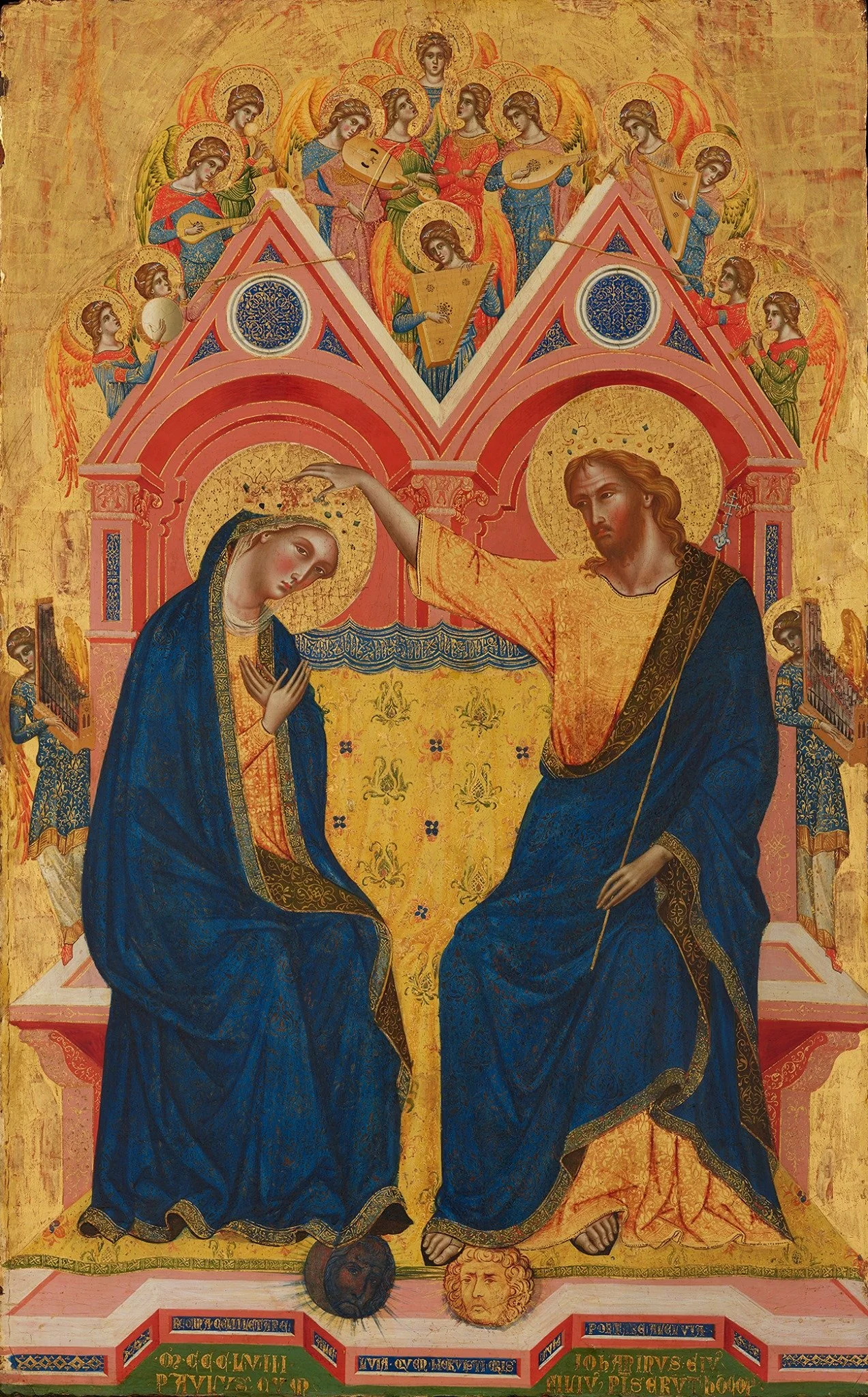
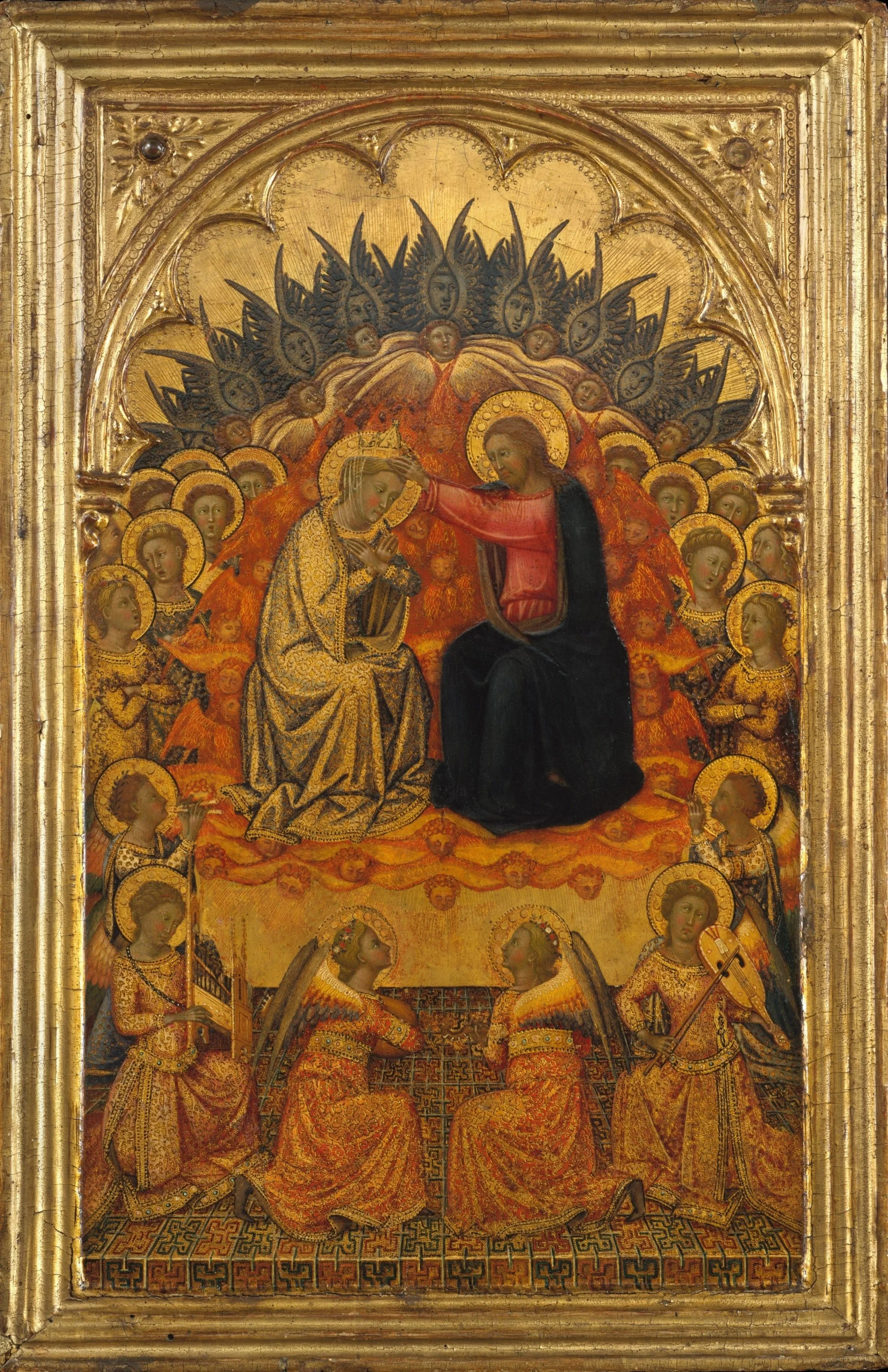
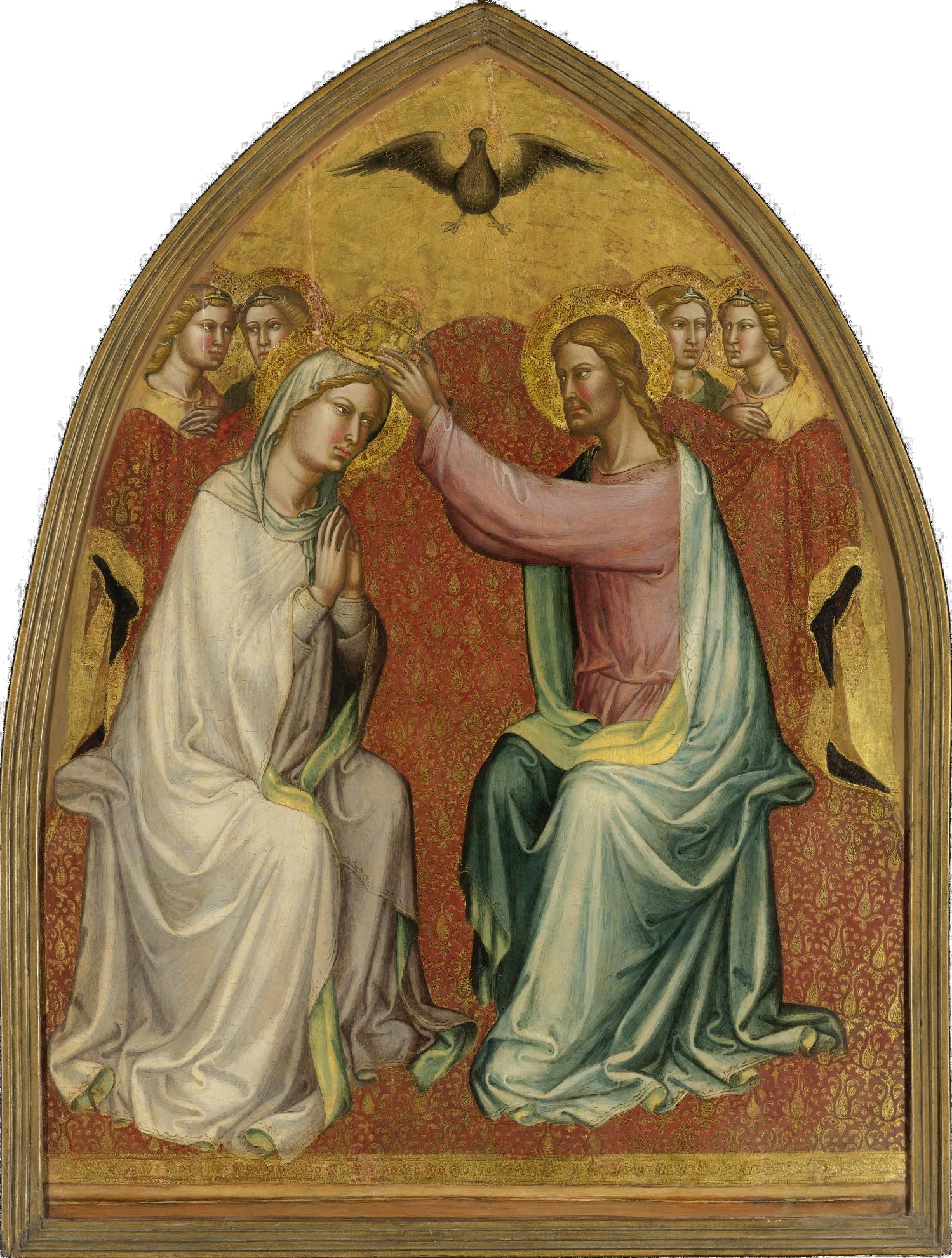
Photo credits
Gentile da Fabriano: Coronation of the Virgin, c. 1420, Wikimedia Commons (Public domain)
Paolo Veneziano: The Coronation of the Virgin, Wikimedia Commons (Public domain)
Niccolò di Buonaccorso: The Coronation of the Virgin, c. 1380, Wikimedia Commons (Public domain)
Martino di Bartolomeo: Coronation of the Virgin, c. 1400, Wikimedia Commons (Public domain)