Before they were masterpieces — “primitives, pre-Renaissance, early Italian”
How Europe looked at gold-ground painting, 1550–1900
For most of their existence, Italian gold-ground panels were not admired. They were tolerated, moved, cut down, painted over, sold cheaply, or acquired specifically as proof of how bad art had once been. The vocabulary that survives in the trade today — primitives, pre- or proto-Renaissance, early Italian — is the residue of that judgement. This is a short account of how the judgement was formed.
Vasari builds the frame
The decisive text is Giorgio Vasari's Vite (1550; expanded 1568). Vasari did not invent contempt for thirteenth-century painting, but he gave it a structure: a narrative of art falling, then rising again through named Tuscan heroes. His term for what came before was the maniera greca, the "Greek manner" — one of the earliest post-classical European style labels. Writing of Giotto, Vasari credited him with banishing "quella goffa maniera greca" — that clumsy Greek manner — and reviving painting from nature.
Two things followed from this. First, gold-ground painting was permanently defined as a stage, not a style: something to be passed through. Second, the objects themselves became historically interesting and aesthetically dispensable at the same time.
Vasari's own indifference is documented. Duccio's Maestà, installed on the high altar of Siena Cathedral in 1311, had been displaced to a side altar around 1506. When Vasari came to Siena for the second edition of the Vite, he could not locate it — and said so.
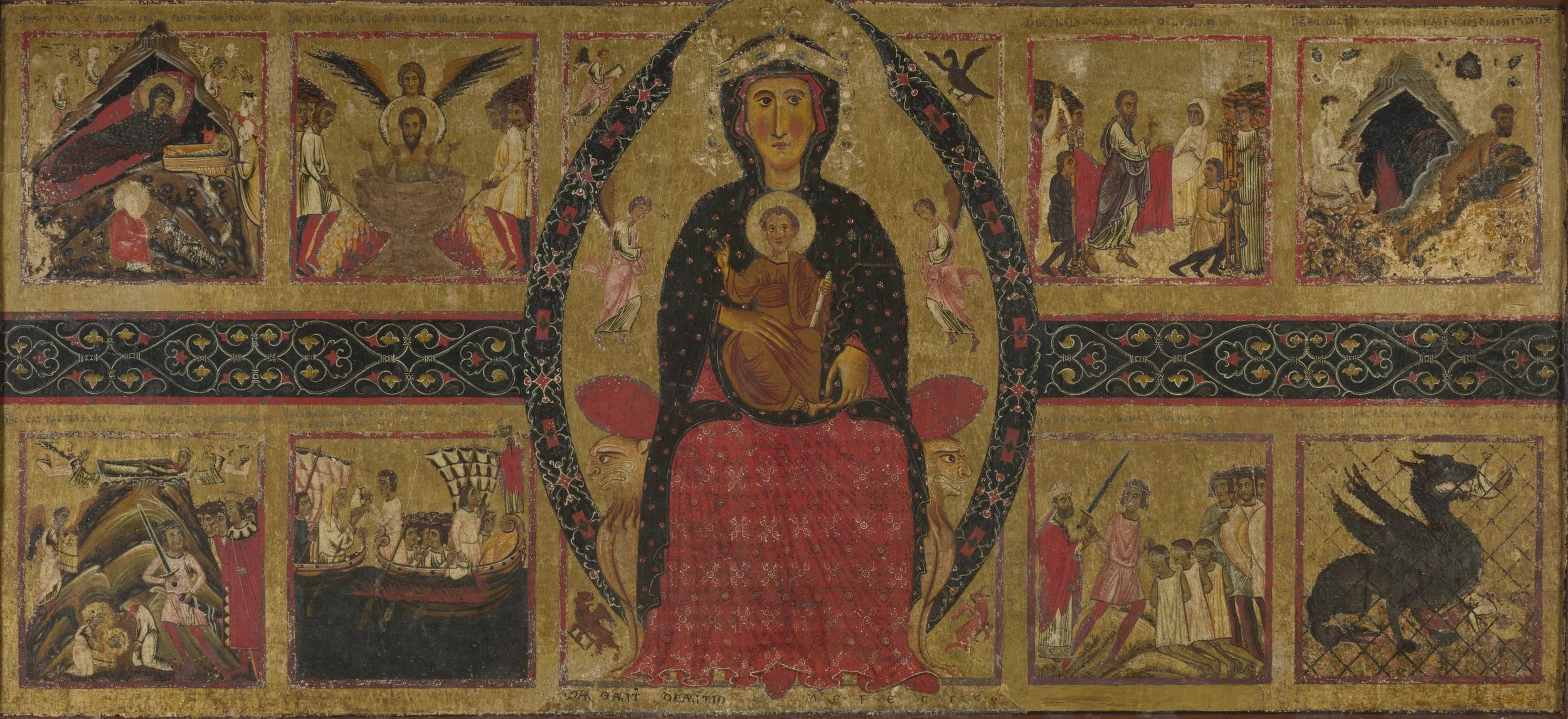
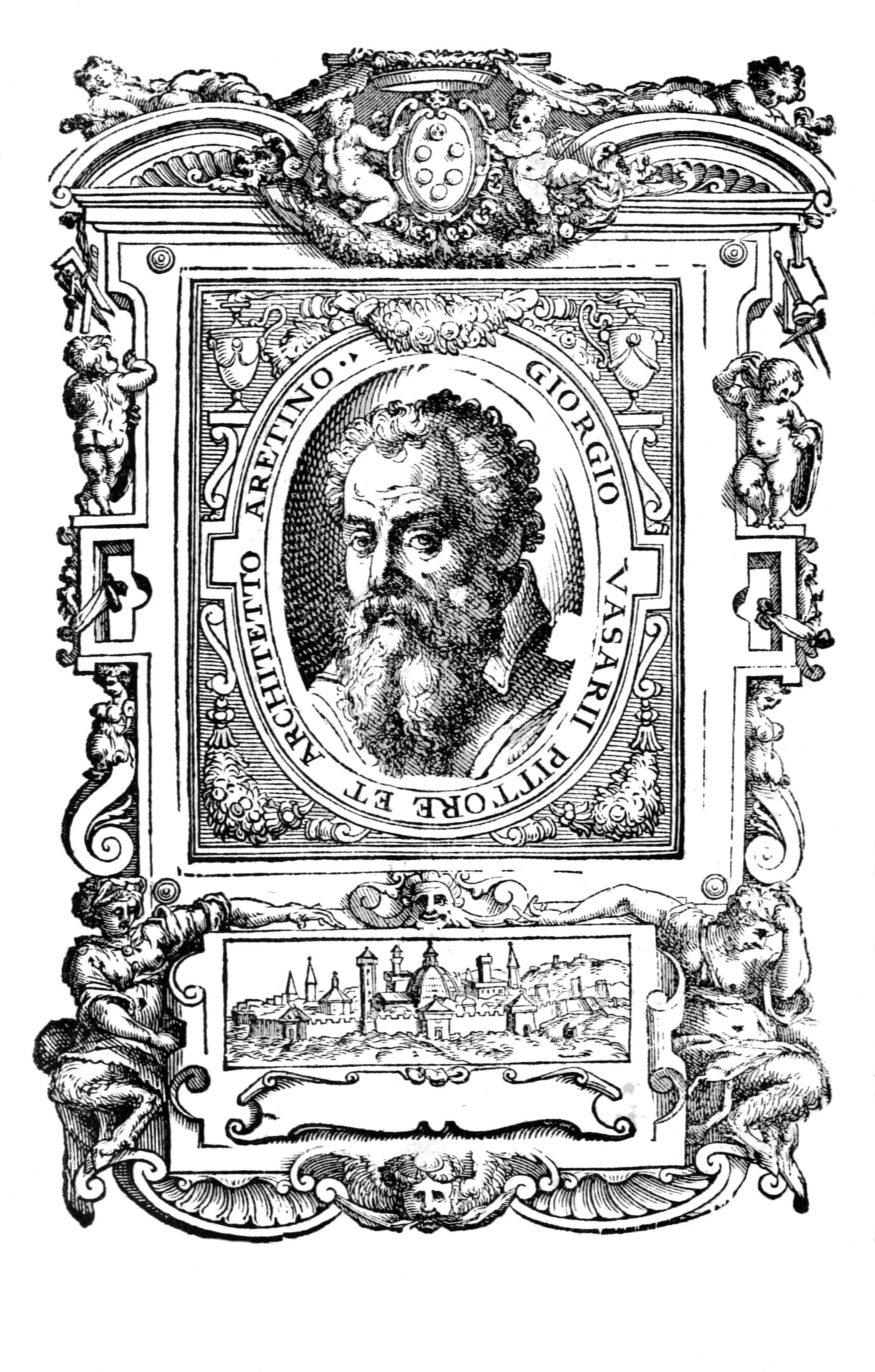
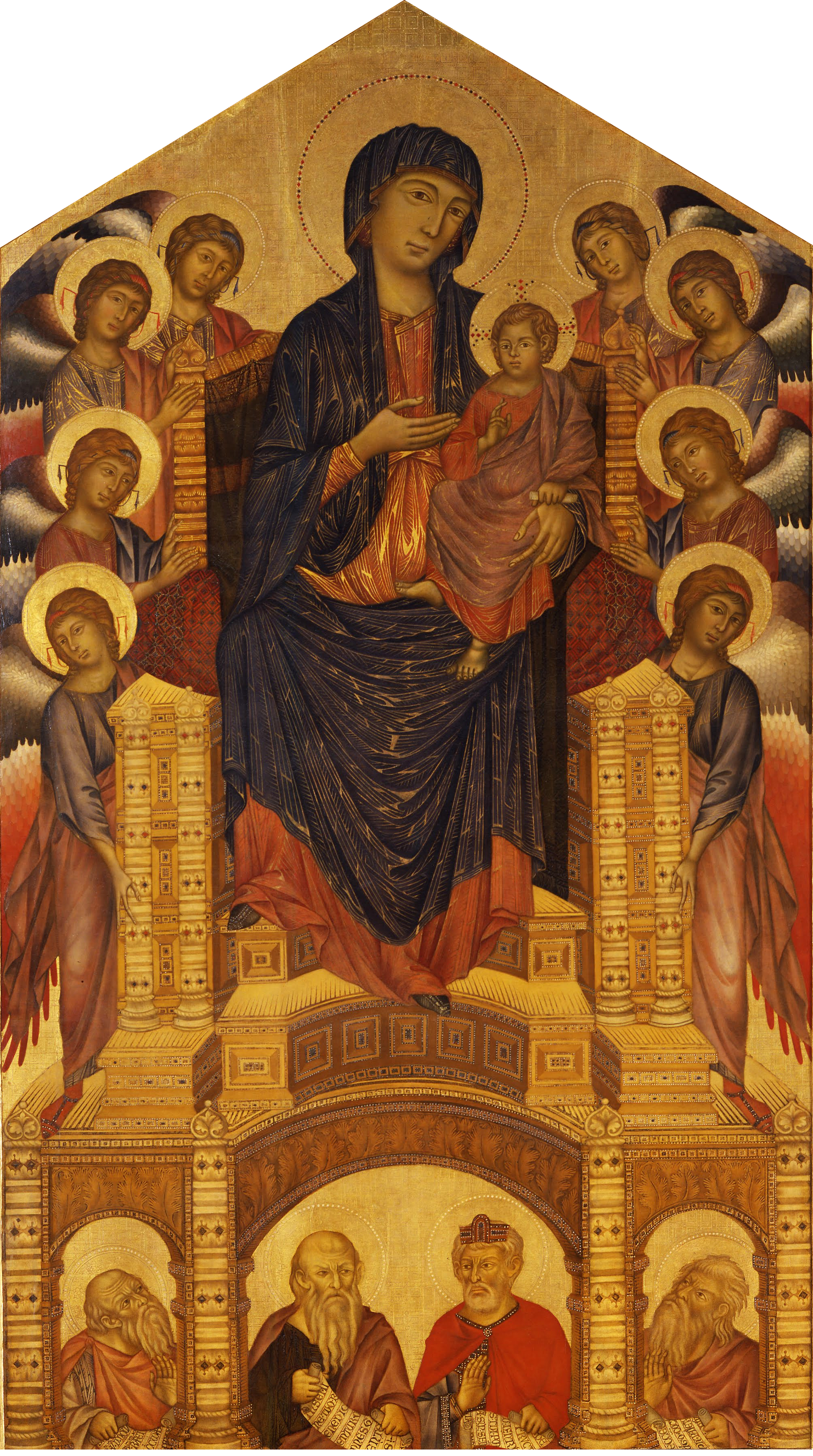
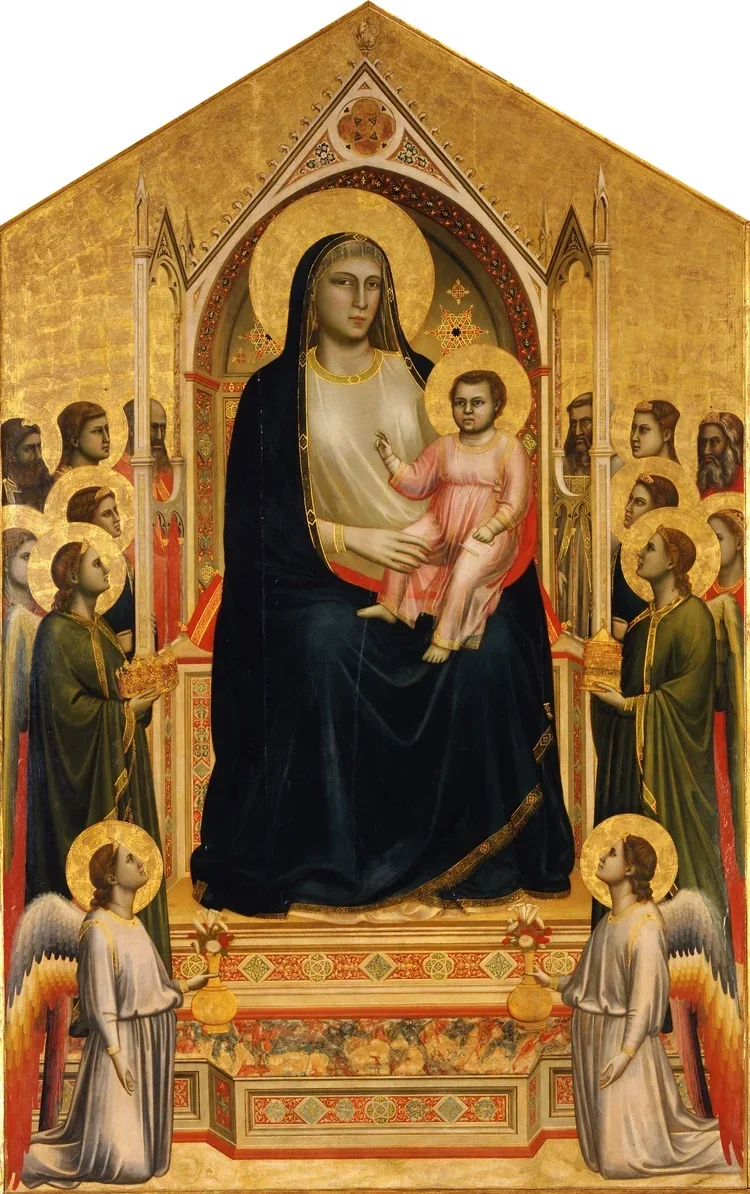
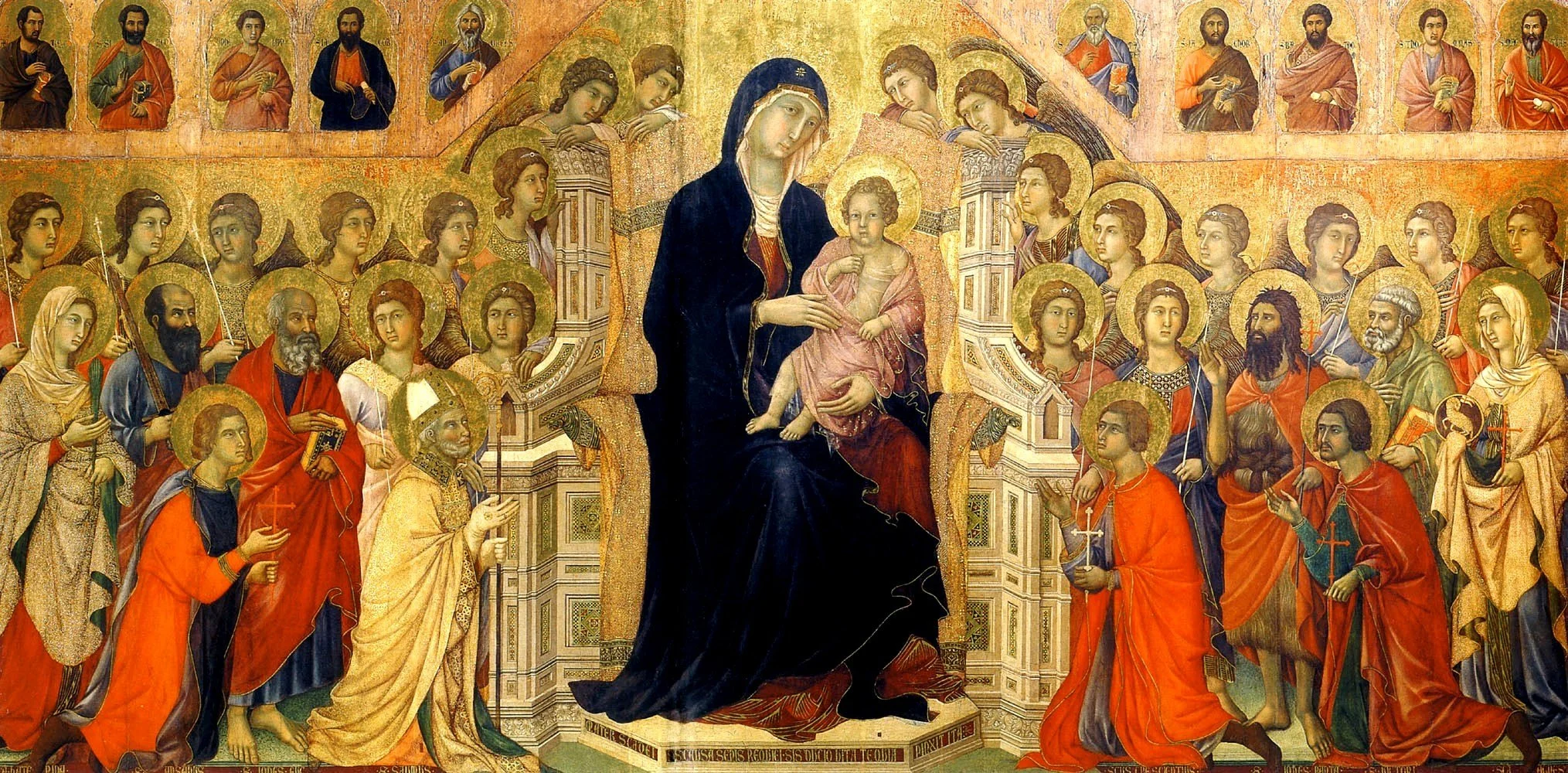
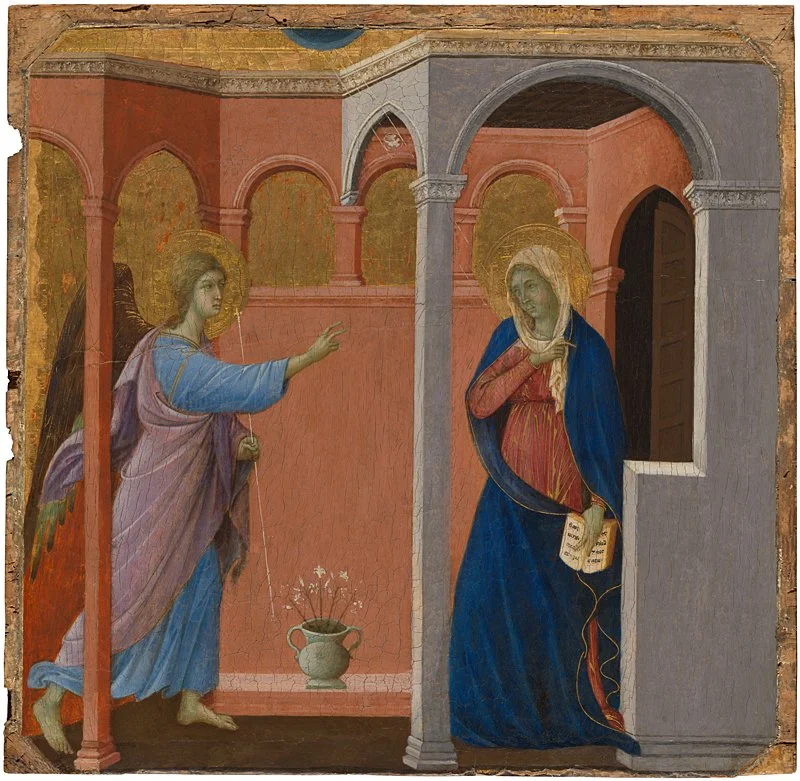

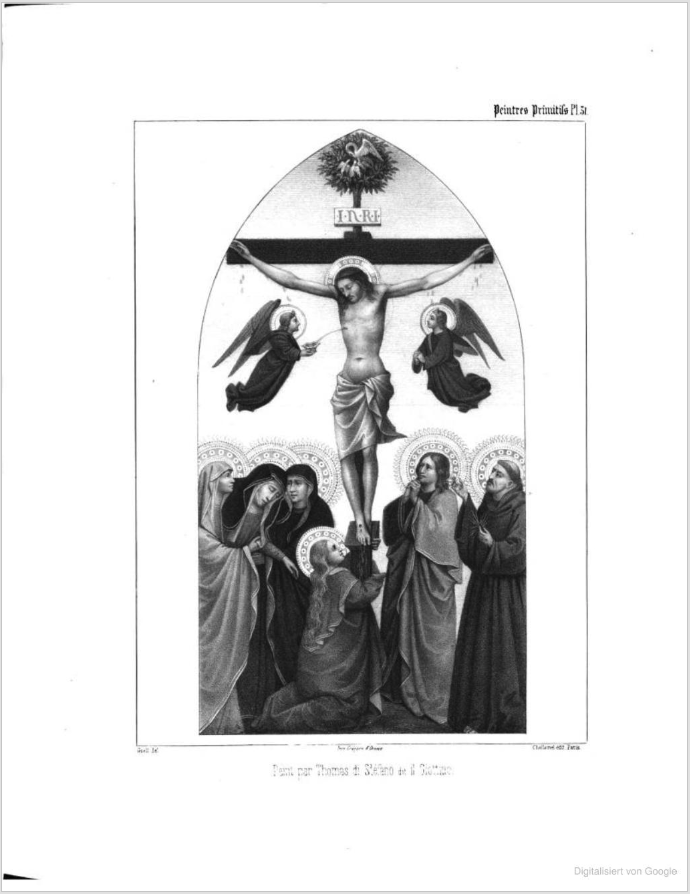
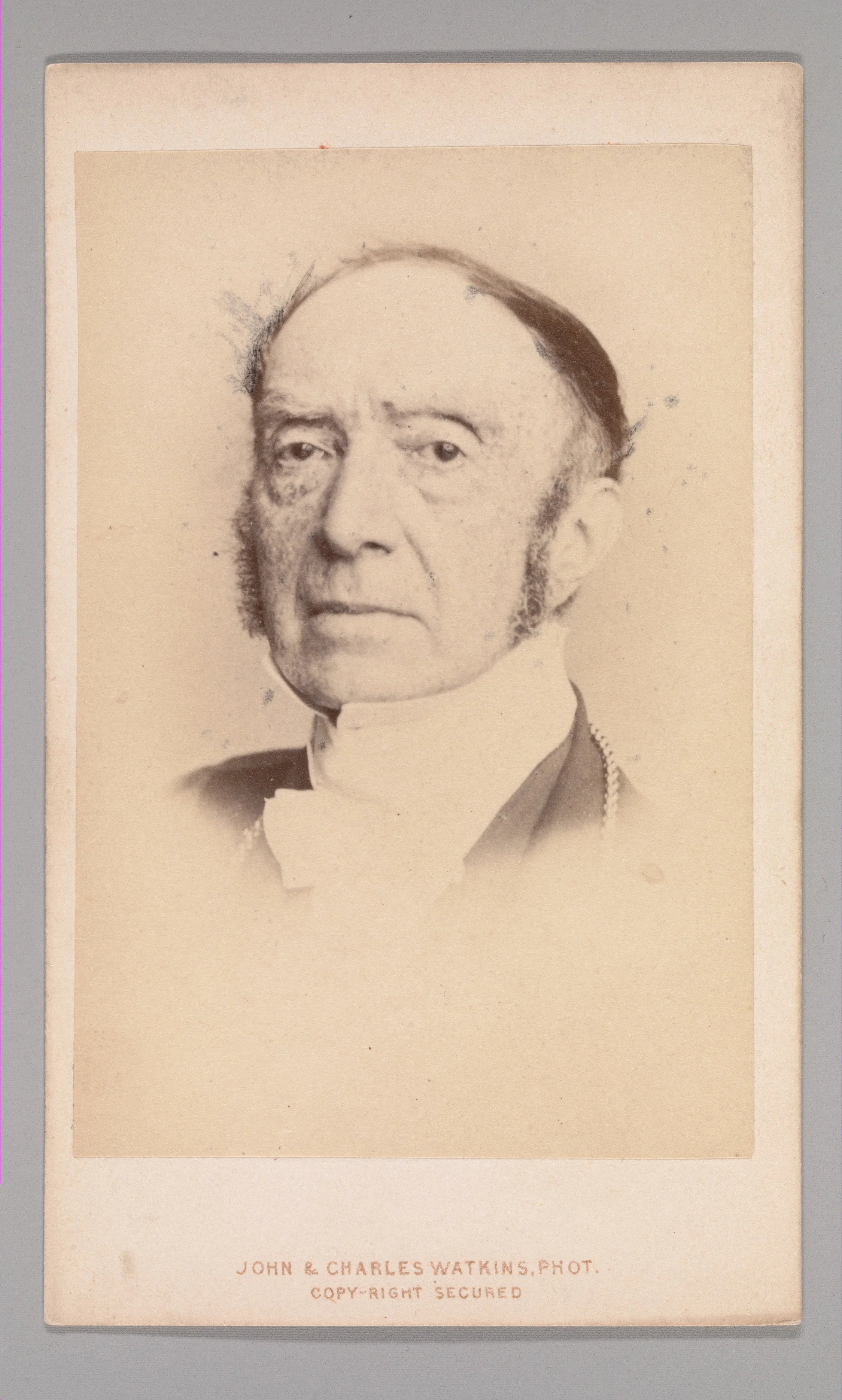
Photo credits
Margarito d'Arezzo, The Virgin and Child Enthroned, c. 1263–64 (National Gallery, London, NG564), Wikimedia Commons (Public domain)
Title page of Vasari's Le Vite, 1568 edition, Wikimedia Commons (Public domain)
Cimabue, Santa Trinita Maestà, c. 1290–1300 (Uffizi), Wikimedia Commons (Public domain)
Giotto, Ognissanti Madonna, c. 1310 (Uffizi), Wikimedia Commons (Public domain)
Duccio, Maestà, central panel, 1308–11 (Museo dell'Opera del Duomo, Siena), Wikimedia Commons (Public domain)
Duccio, A dispersed Maestà panel — The Annunciation, National Gallery, London (NG1139), Wikimedia Commons (Public domain)
A plate from Séroux d'Agincourt, Histoire de l'art par les monumens (1810–23), Wikimedia Commons (Public domain)
A lithographic plate from Artaud de Montor, Peintres primitifs (1843), Wikimedia Commons (Public domain)
Portrait of Sir Charles Lock Eastlake, Wikimedia Commons (Public domain)
Two centuries of quiet attrition
The Maestà is the clearest case study in what low esteem does. On 1 August 1771 the double-sided altarpiece was dismembered so that its two painted faces could serve separate altars. It was roughly sawn into seven parts and then split down further, predella and crowning panels included. The poplar boards, glued and nailed, resisted the blade; the figures of the Virgin and Child were damaged in the process. Panels went astray, were sold, or vanished. Today the surviving pieces are divided between Siena, London, Washington, New York and elsewhere.
Nothing about this was exceptional. Large Gothic polyptychs were unwieldy, unfashionable, and — once dismantled — far easier to sell as individual pictures. The economics of dismemberment were established well before the nineteenth-century art market industrialised them.
The market itself barely existed. William Young Ottley, an Englishman who spent the 1790s buying in Italy during the French invasions, auctioned his sixteenth- and seventeenth-century pictures at Christie's in May 1801 at considerable profit. His earlier Italian panels he kept — there was effectively no English market for them at all.
Napoleon supplies the raw material
What changed the situation was not taste but confiscation. The decree of 13 September 1810 suppressing religious houses across the annexed Italian territories emptied churches and convents on a scale nothing else could have achieved. Dominique-Vivant Denon, director of the Musée Napoléon, spent five months in 1811–12 on a collecting tour through Tuscany, deliberately targeting Cimabue, Giotto, Fra Angelico and their contemporaries. Around the same operation, and in its wake, altarpieces that had stood intact for four centuries were broken into saleable units.
The intellectual frame arrived alongside. Séroux d'Agincourt's Histoire de l'art par les monumens depuis sa décadence au IVe siècle jusqu'à son renouvellement au XVIe (six volumes, 1810–1823) announced its thesis in its title: decadence, then renewal. Medieval material was worth engraving and cataloguing precisely because it documented the fall.
The first collectors — and what they thought they were collecting
Alexis-François Artaud de Montor, a French diplomat posted to Florence, assembled roughly a hundred early Italian panels before leaving Italy in 1807. His Considérations sur l'état de la peinture en Italie dans les quatre siècles qui ont précédé celui de Raphaël(1808) served as the collection's first catalogue; the collection was open to visitors from at least 1811, making it the earliest public display of Italian primitives in France — ahead of Denon's 1814 Louvre exhibition of the écoles primitives of Italy and Germany. Note the framing embedded in Artaud's own title: four centuries preceding Raphael. The pictures are located by what they are not yet.
The largest accumulation was Edward Solly's. An English timber and grain merchant living in Berlin, Solly gathered over 3,000 paintings between roughly 1813 and 1821, with an unusual concentration of Italian Trecento and Quattrocento work and Early Netherlandish panels — schools then almost unwanted. In 1821 he sold the collection to Friedrich Wilhelm III of Prussia; 677 pictures formed the founding core of the gallery that opened in the Royal Museum in 1830. In that opening display, a portion of the holdings was described as "historical curiosities." The term is exact: they were exhibits, not paintings.
The moral turn: valued for piety, not for painting
From the 1830s a genuine revaluation began — but on religious rather than pictorial grounds. Alexis-François Rio's De la poésie chrétienne (1836) argued that the idealism of medieval art had been destroyed in the fifteenth century by naturalism. Lord Lindsay's three-volume Sketches of the History of Christian Art (1847) built a moral hierarchy in which works are ranked by the balance of sense, intellect and spirit. Rio's thesis was widely argued over in the 1840s; Lindsay's book strongly shaped aristocratic collecting in Britain, though Ruskin derided it.
The Pre-Raphaelite Brotherhood, founded in 1848, made the position a programme in its very name. But this was not an appreciation of gold-ground painting on its own terms. It was an appreciation of its supposed sincerity — the flatness, the gold, the hieratic frontality read as evidence of faith rather than as deliberate pictorial decisions.
The museums: acquired as evidence
Nowhere is the underlying attitude more legible than in the National Gallery, London. Charles Lock Eastlake, its first Director from 1855 to 1865, bought early Italian panels systematically at a time when many considered them unsightly and unsuitable as models for students. In 1857 he purchased twenty-two early Florentine and Sienese pictures from the Florentine dealers Francesco Lombardi and Ugo Baldi, for roughly £7,000 — a group that included Uccello's Battle of San Romano, a Duccio (NG566), and Margarito d'Arezzo's Virgin and Child Enthroned (NG564, probably about 1263–64), still the oldest painting in the collection.
The Gallery's annual report for 1858 justified the purchase in plain terms: such pictures showed "the barbarous state into which art had sunk" in Italy before its revival. This is the crux of the whole period. The most ambitious institutional buyer of gold-ground panels in Europe was acquiring them as documentary evidence of a low point — narrative connective tissue leading the visitor toward Raphael.
What the low valuation did to the objects
Attitudes leave physical traces. Margarito's NG564 was restored in the early nineteenth century in a manner then considered normal: the original gilding was stripped from its engaged frame and replaced with fresh gold, and the decorated red border was overpainted in reddish-brown. Recent conservation removed that overpaint, revealing an original red border with a foliate design in orpiment yellow, invisible for roughly two centuries. Elsewhere, gold grounds were overpainted with blue or landscape backgrounds to modernise pictures; panels were thinned, cradled, cut to fit new frames, and separated from the carpentry that gave them meaning.
The turn toward evidence
The shift to something recognisable as modern study came with method rather than sentiment. Joseph Archer Crowe and Giovanni Battista Cavalcaselle published A New History of Painting in Italy in three volumes from 1864 to 1866, working from chronologies of individual development and from the identification of hands — an approach that treated Trecento painters as artists with careers rather than as symptoms of an era. Cavalcaselle also advised the National Gallery on acquisitions. By the 1890s, the connoisseurial apparatus that Bernard Berenson would build his career on was largely in place.
What did not shift was the vocabulary. "Primitive" survived the revaluation and is still with us — in auction catalogues, in gallery labels, in the way collections are ordered. It is worth remembering what the word was originally doing: not describing a style, but marking a position in someone else's story.
Sources
Vasari's maniera greca and the phrase quella goffa maniera greca (Life of Giotto): https://en.wikipedia.org/wiki/Italo-Byzantine
Duccio's Maestà: displacement in 1506, Vasari's failure to find it, dismemberment on 1 August 1771: https://www.wga.hu/tours/siena/maesta.html and https://www.italianartsociety.org/2015/06/duccios-maesta-was-placed-on-the-high-altar-of-siena-cathedral-on-9-june-1311/
Napoleonic suppression decree of 13 September 1810 and Denon's 1811–12 collecting tour: https://blog.oup.com/2010/04/plunder/ and https://www.france24.com/en/europe/20210507-glory-of-arms-and-art-napoleonic-plunder-and-the-birth-of-national-museums
Dispersal of altarpieces through suppression (Perugino's San Pietro polyptych as a case): https://smarthistory.org/napoleons-appropriation-of-italian-cultural-treasures/
Artaud de Montor, Peintres primitifs (1843), full text: https://gallica.bnf.fr/ark:/12148/bpt6k55513584/texteBrut
William Young Ottley and the absent English market for early panels in 1801: https://en.wikipedia.org/wiki/William_Young_Ottley
Edward Solly, 3,000+ works, 1821 sale to Prussia, 677 selected, 1830 opening, "historical curiosities": https://www.smb.museum/en/exhibitions/detail/the-solly-collection-1821-2021/ and https://smb.museum-digital.de/people/63480
Alexis Rio, De la poésie chrétienne (1836) and its reception: https://resolve.cambridge.org/core/journals/pmla/article/context-of-brownings-painter-poems-aesthetics-polemics-histories/51D1E9B3924B513D0BF7C2E19BCB2F14
Lord Lindsay, Sketches of the History of Christian Art (1847): https://www.royalacademy.org.uk/art-artists/book/sketches-of-the-history-of-christian-art-by-lord-lindsay-volume-i-iii
Eastlake's directorship and the perception of his early Italian purchases as unsightly: https://www.theartnewspaper.com/2024/08/04/the-national-gallery-london-an-artists-gallery
Lombardi-Baldi purchase, 1857, twenty-two works, c. £7,000: https://www.manchesterhive.com/downloadpdf/view/journals/bjrl/64/2/article-p287.pdf
Margarito d'Arezzo NG564, provenance and 1858 annual report justification: https://www.nationalgallery.org.uk/paintings/margarito-d-arezzo-the-virgin-and-child-enthroned-with-narrative-scenes and https://en.wikipedia.org/wiki/Margaritone_d'Arezzo
Nineteenth-century re-gilding and overpainting of NG564, and its recent reversal: https://www.nationalgallery.org.uk/behind-the-scenes/restoring-the-gallerys-oldest-painting
Crowe and Cavalcaselle, A New History of Painting in Italy, 1864–66, and Cavalcaselle's role at the National Gallery: https://en.wikipedia.org/wiki/Giovanni_Battista_Cavalcaselle