
Resources > Masters
Fra Angelico
c. 1395 in Mugello; † 1455 in Rome - 15th century - Quattrocento
Fra Angelico (born Guido di Pietro, was a defining master of the Early Italian Renaissance, celebrated for seamlessly bridging the gap between Late Gothic spiritual devotion and the pioneering humanism of the 15th century. As a Dominican friar, his artistic output was deeply intertwined with his religious life, earning him a posthumous reputation for profound piety and the moniker "Angelico" (the Angelic). Working extensively in Florence, Fiesole, and Rome, he masterfully adopted the new rules of linear perspective and naturalism championed by contemporaries like Masaccio and Brunelleschi, yet he retained a brilliant, luminous palette and a masterful use of gold leaf (fondo oro) that gave his sacred subjects an ethereal, otherworldly radiance. His frescoes for the convent of San Marco stand as a pinnacle of monastic art, reflecting a rare equilibrium where monumental Renaissance form serves an intimately poetic and contemplative faith.
The Fondazione Federico Zeri provides the most comprehensive database available for Italian art of this era and from this master.
The Federico Zeri Catalogue lists 239 unique works (see list 🔗) under Fra Angelico.
Wikipedia 🔗 - Grokipedia 🔗 - Wikimedia Commons 🔗


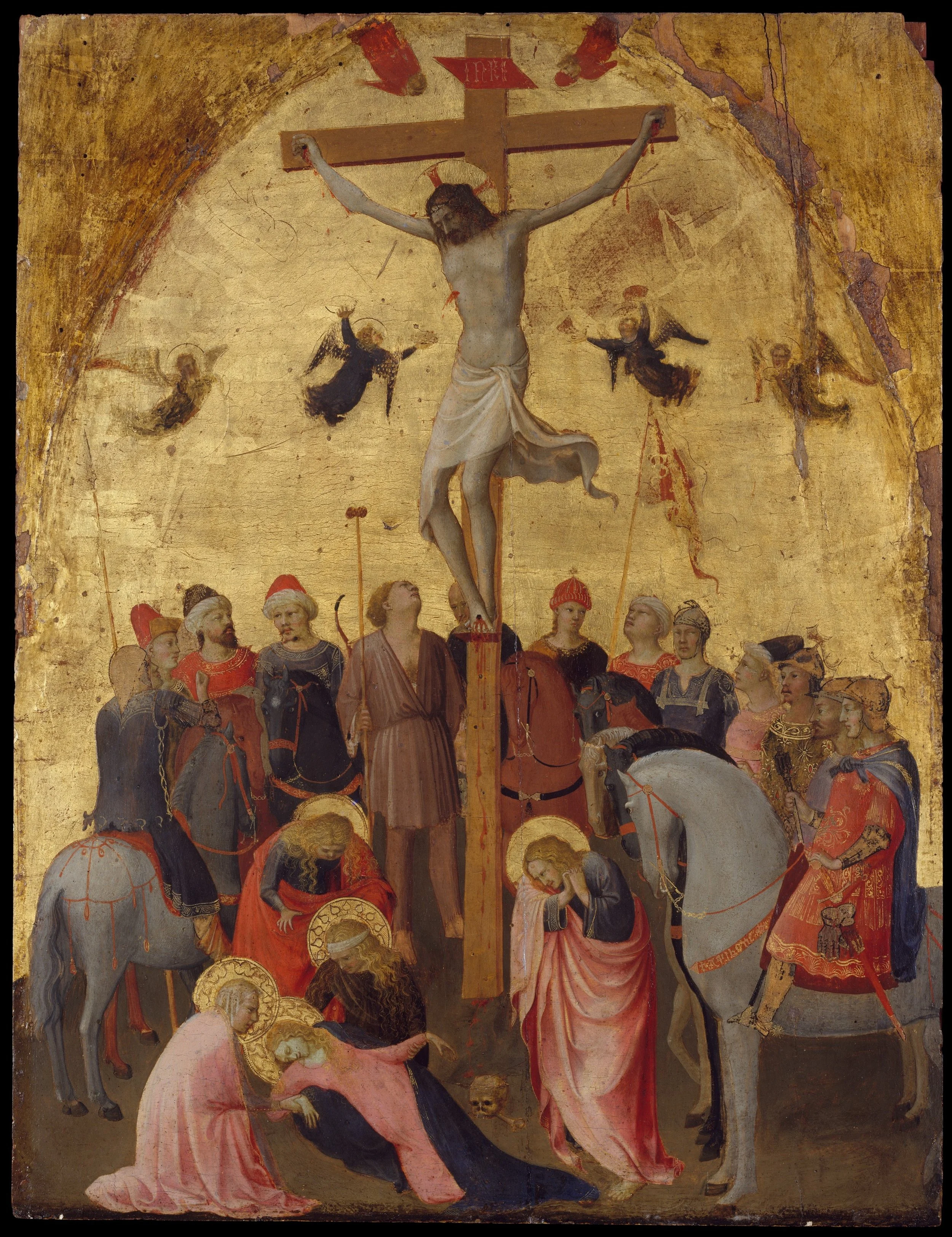

Photo credits
Fra Angelico: Madonna with Child, c. 1423-1443, Bode Museum, Wikimedia Commons (Public domain)
Fra Angelico: Madonna and Child Enthroned with Nine Angels and Saints Dominic and Catherine of Alexandria, c. 1435, Pinacoteca Vaticana, Wikimedia Commons (Public domain)
Fra Angelico, Crucifixion, c. 1423, THE MET, Wikimedia Commons (Public domain)
Fra Angelico: Christ on the Cross, the Virgin, Saint John the Evangelist, and Cardinal Torquemada, c. 1453-1454, Fogg Museum, Wikimedia Commons (Public domain)