
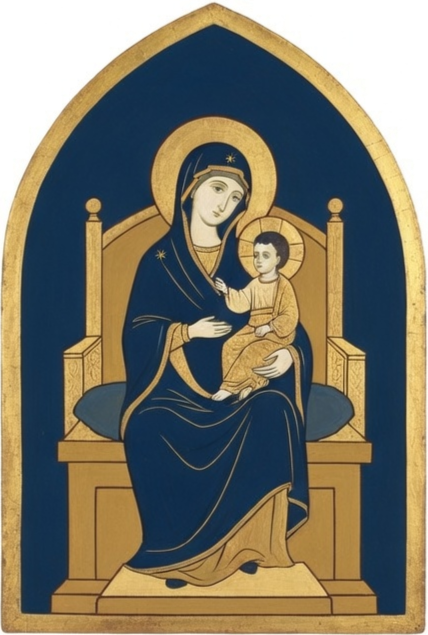
Schematic representation, generated with AI
Resources > Recurring depictions
Madonna con Bambino in trono
The Madonna con Bambino in trono (Madonna and Child Enthroned), often celebrated as the Maestà, represents the public and sovereign manifestation of the Virgin as the Queen of Heaven. While the simple Madonna con Bambino captures an intimate maternal bond, the enthroned variant elevates the subject to a monumental icon of the Regina Coeli—the architectural and theological anchor of the Italian altarpiece.
This composition served as the definitive centerpiece for the great polyptychs and high altars of the Italian Trecento, a structural dominance that remains the cornerstone of the Federico Zeri Foundation’s extensive photographic surveys of medieval and early Renaissance panels.
The image is governed by the archetype of the Maestà: the Virgin seated upon a throne that evolved from a simple, symbolic wooden bench into an elaborate, marble-inlaid structure reflecting the burgeoning interest in Gothic architecture. Against the unyielding radiance of the gold ground—which here signifies the architecture of Paradise—the throne serves as the first tentative step toward defining physical space within the realm of the divine.
From the towering, multi-layered perspectives of Cimabue to the radical spatial revolution of Giotto, who transformed the throne into a weight-bearing, three-dimensional tabernacle, the Madonna con Bambino in trono documented the shift from the symbolic "Maniera Greca" to the birth of Western perspective.
Wikipedia 🔗 - Grokipedia 🔗
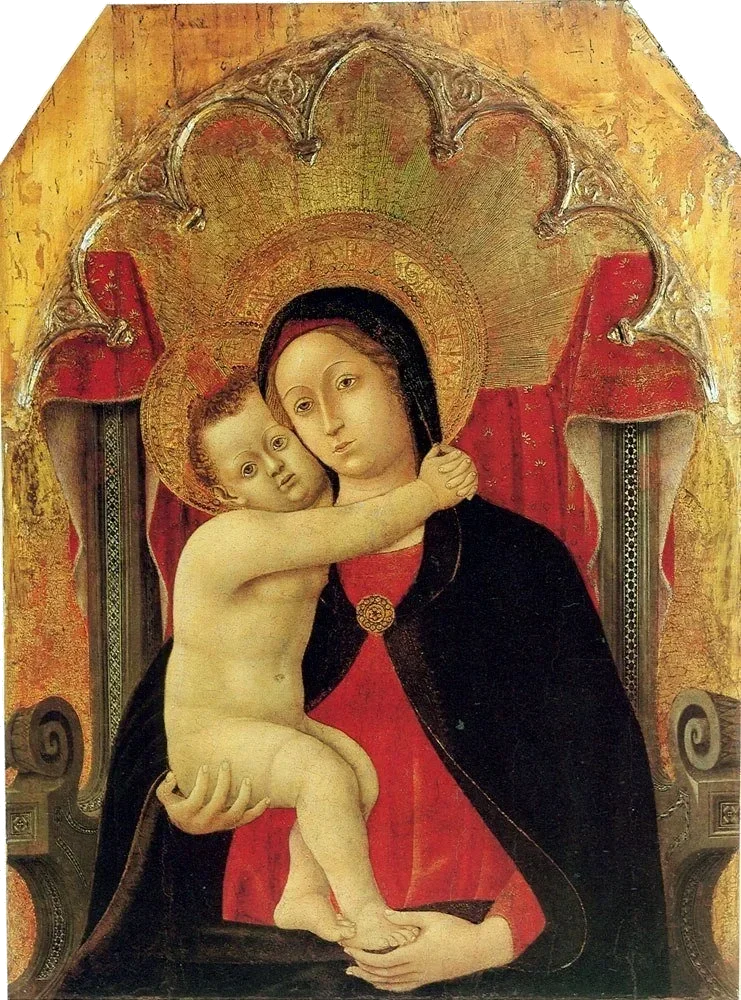
Photo credits
Domenico di Bartolo: Madonna and Child, c. 1436, Wikimedia Commons (Public domain)