
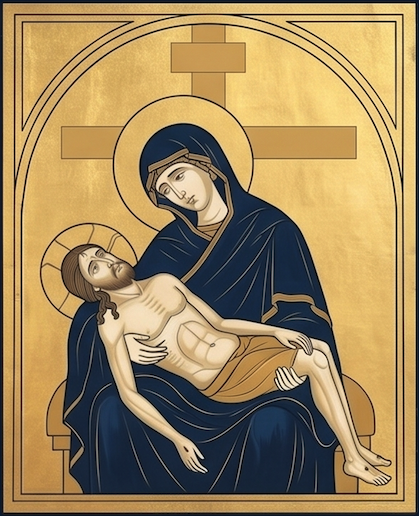
Schematic representation, generated with AI
Resources > Recurring depictions
Cristo in Pieta
The Cristo in Pieta (Christ in Pity) represents the most poignant and emotionally charged expression of compassion within the Italian Fondo Oro tradition. It depicts the dead body of Christ, usually supported by the Virgin Mary, as the central image of human suffering and divine sacrifice, inviting the faithful into a direct meditation on the Passion and Redemption.
This iconographic type emerged as one of the most powerful devotional subjects in Italian painting from the late 13th to the 15th century. Frequently placed on the predella of polyptychs, in private chapels, or as independent panels for personal contemplation, it served as a focal point for mourning, repentance, and empathetic prayer. The theme occupies a significant place in the photographic archives of the Federico Zeri Foundation, documenting its widespread diffusion across Central and Northern Italian schools.
The iconography follows a concentrated and dramatic composition: the lifeless body of Christ is presented upright or semi-recumbent, often held by the grieving Madonna, whose sorrowful expression and gesture heighten the emotional intensity. Sometimes accompanied by Saint John the Evangelist, Mary Magdalene, or angels, the figures create an intimate sacred group united by shared grief. Against the luminous gold ground — the timeless light of the Heavenly Jerusalem — the pale, wounded body of Christ stands out with stark realism, the blood from the side wound and the Crown of Thorns rendered with almost tactile precision. The gold background paradoxically intensifies both the eternal dimension of the sacrifice and the raw humanity of the suffering.
From the rigid, almost symbolic representations of the early Maniera Greca, with their stylized wounds and frontal presentation, to the increasingly naturalistic and emotionally expressive interpretations of Giotto, the Sienese masters, and 15th-century artists, the Cristo in Pietà mirrored the profound transformation of Western religious art. The figures gained volume and anatomical truth, gestures became more tender and dramatic, and the composition moved toward greater spatial cohesion and psychological depth. While the gold ground endured, it gradually began to incorporate landscape elements or simple architectural settings, allowing the tragic beauty of the Pietà to reach its full expressive power on the threshold of the Renaissance.
Wikipedia 🔗 - Grokipedia 🔗
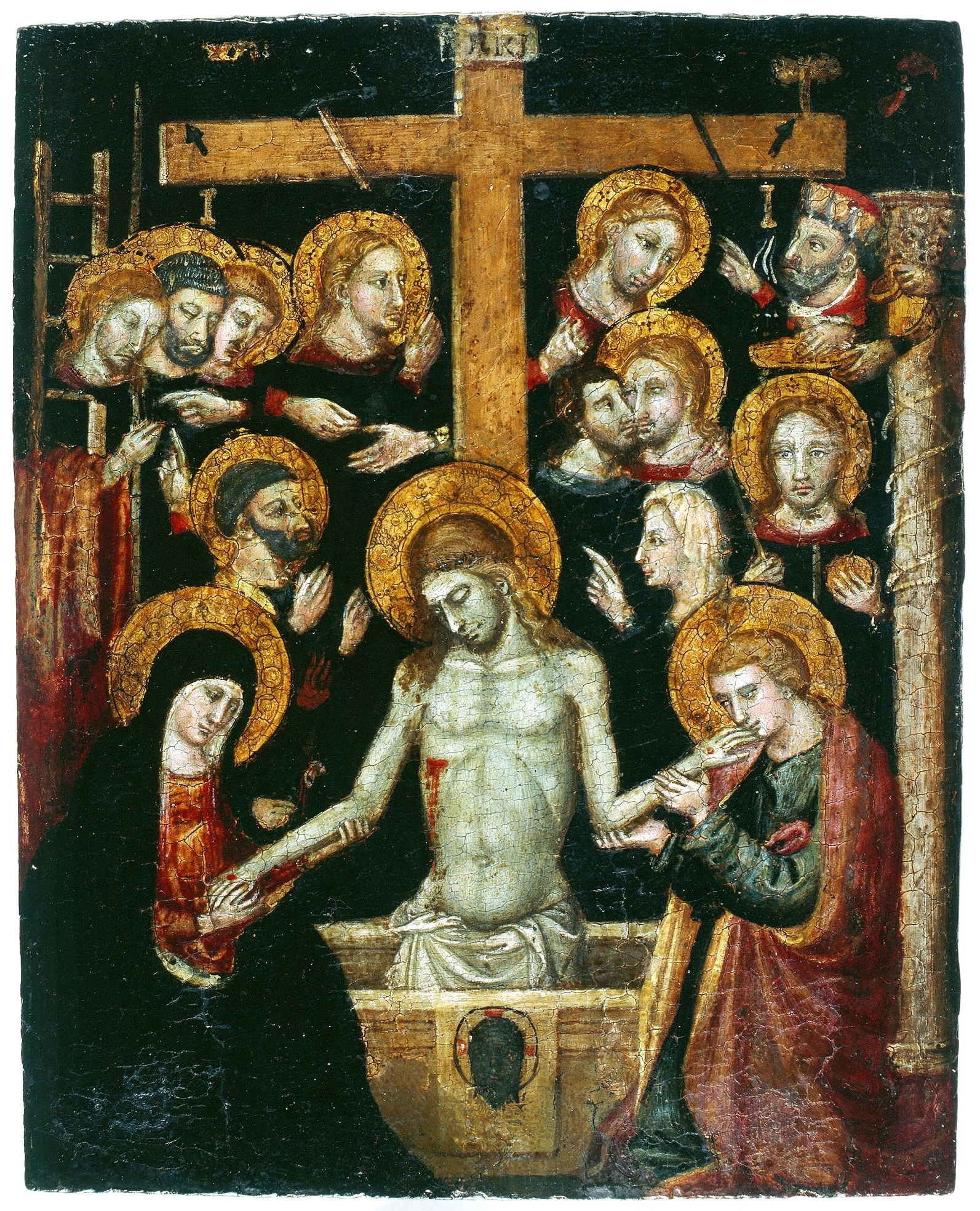
Photo credits
Lorenzo di Bicci, Imago Pietatis, Wikimedia Commons (Public domain)