
Resources > Publikationen auf Deutsch
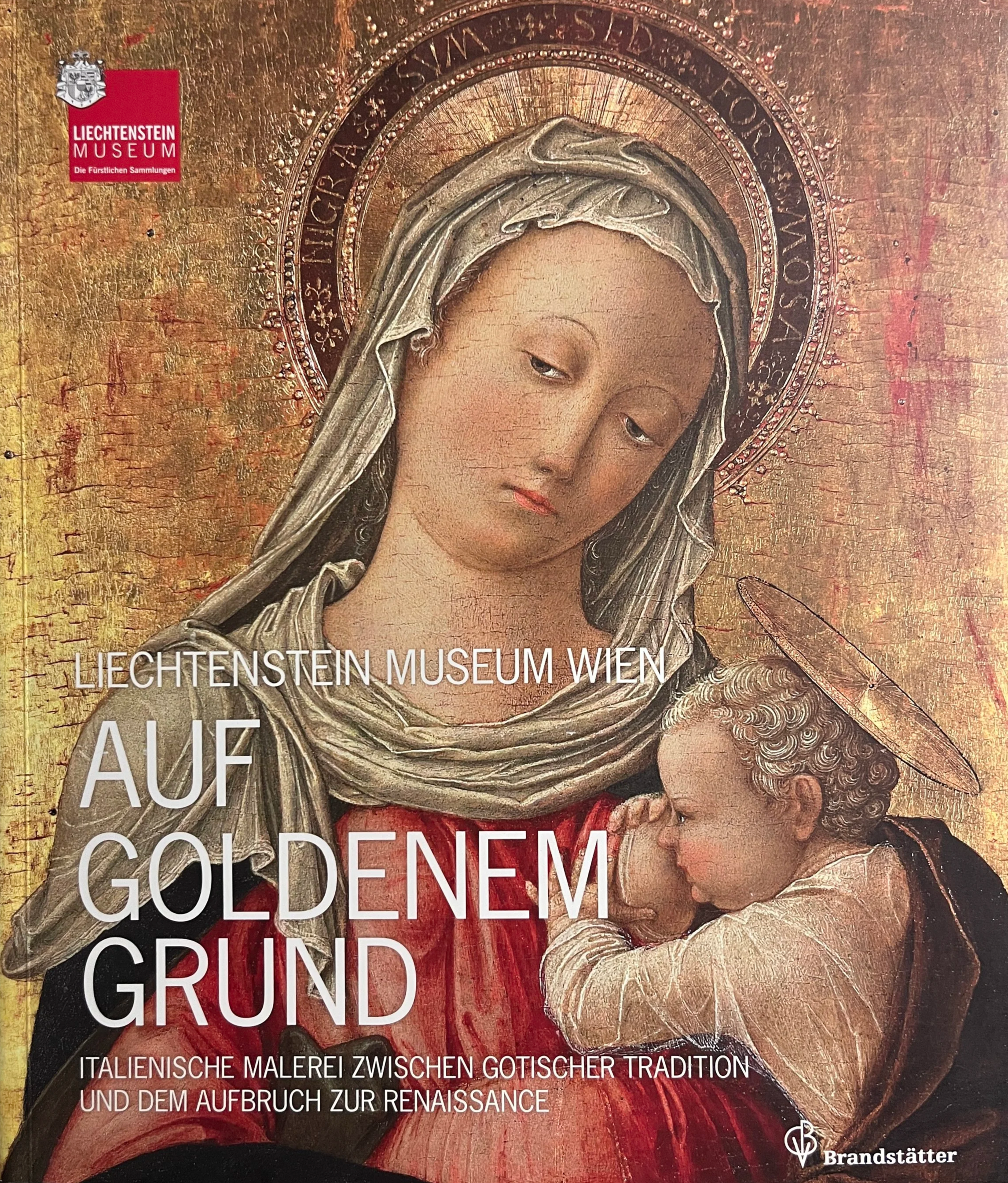
Auf goldenem Grund
Italienische Malerei zwischen gotischer Tradition und dem Aufbruch zur Renaissance
Lichtenstein Museum, Wien
Herausgegeben von Johann Kräftner und mit Beiträgen von Alexandra Hanzl
Brandstätter, 2009, 104 pages, Softcover, ISBN: 9783850332835
"Goldgrundbilder", wie sie im kunsthistorischen Kontext kurz genannt werden, spielten in den Fürstlichen Sammlungen von Anfang an eine Rolle. Nun werden diese Werke der frühen italienischen Malerei mit einer eigenen Sonderschau entsprechend gewürdigt.
Etwa 40 Kunstwerke der Zeit zwischen 1325 und 1520, darunter Gemälde von Bernardo Daddi, Lorenzo Monaco, Giovanni di Paolo, Sassetta, Bartolomeo Vivarini und Liberale da Verona, veranschaulichen die Entwicklung der italienischen Malerei der Gotik und Frührenaissance und die Themenvielfalt dieser Epochen. Die Auswahl und Zusammenstellung der Werke deckt praktisch alle wesentlichen italienischen Kunstlandschaften jener Zeit ab – von Oberitalien bis zu Neapel im Süden, das noch unter starkem französischem Einfluss gestanden ist –, erhebt jedoch nicht den Anspruch auf Vollständigkeit. Einen besonderen Kernbestand der Ausstellung bilden Gemälde aus der Toskana mit einem Schwerpunkt auf Siena und Florenz.
Der inhaltliche Bogen spannt sich von mehrteiligen kleinen Flügelaltären, die noch in ihrem ursprünglichen Aufbau erhalten sind, sowie Varianten des Bildtypus’ der thronenden Gottesmutter mit Kind, die sich im Laufe des 14. und 15. Jahrhunderts herausgebildet haben, über kleinteilige Heiligentäfelchen, die einst im Verband grösserer Altäre standen, bis hin zu seltenen Profanthemen, wie etwa der Wiedergabe von drei Episoden aus einem Tristanzyklus. Der thematische Schwerpunkt liegt jedoch auf der religiösen Malerei.
Book info text in English
"Gold-ground paintings," as they are commonly called in art historical contexts, have played a role in the Princely Collections from the very beginning. Now, these works of early Italian painting are being given due recognition with a dedicated special exhibition.
Approximately 40 artworks from the period between 1325 and 1520, including paintings by Bernardo Daddi, Lorenzo Monaco, Giovanni di Paolo, Sassetta, Bartolomeo Vivarini, and Liberale da Verona, illustrate the development of Italian painting during the Gothic and Early Renaissance periods and the thematic diversity of these eras. The selection and arrangement of the works covers virtually all the major Italian art regions of that time—from Northern Italy to Naples in the south, which was still under strong French influence—but does not claim to be exhaustive. A particular core of the exhibition consists of paintings from Tuscany, with a focus on Siena and Florence.
The collection's scope ranges from small, multi-part winged altarpieces preserved in their original structure, and variations of the enthroned Madonna and Child motif that developed during the 14th and 15th centuries, to small, intricate panels depicting saints, once part of larger altarpieces, and even rare secular works, such as depictions of three episodes from a Tristan cycle. However, the main focus remains on religious painting.