
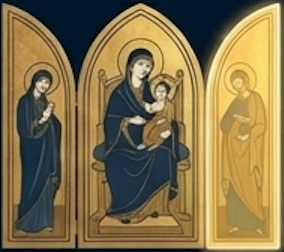
Schematic representation, generated with AI
Resources > Objects
Triptych panel
A Triptych panel (from the Greek triptykhos, meaning "three-layered" or "three-fold") is an individual component of a three-part altarpiece or devotional structure. Historically emerging as a dominant format during the Gothic and early Renaissance eras, a triptych consists of a central picture panel flanked by two narrower side panels (wings).
Distinction and Structural Typology
In art historical classification, a "triptych panel" must be evaluated based on its specific structural role, as these objects were built using advanced joinery and hinges to serve varying architectural and liturgical functions:
Central Panel vs. Wing Panels: The central panel forms the visual anchor of the ensemble, typically presenting a fixed, iconic image like the Majestas Domini (Christ in Majesty) or the Virgin and Child. The flanking wing panels, by contrast, are exactly half the width of the central panel. This geometry allows the wings to fold inward and meet perfectly in the middle, fully enclosing and protecting the central image.
The Stationary Triptych: Often executed on a massive scale for public altars, these structures featured fixed or semi-permanent framing. Though styled as a triptych with distinct vertical divisions, the panels remained statically open, functioning as a continuous visual landscape broken up by architectural columns or pilasters.
The Portable and Devotional Triptych: On a domestic scale, the wings were attached to the central panel via iron or brass hinges. The exterior backs of the wings were often painted with simpler grisaille (monochrome gray) or decorative patterns, as they would remain closed for long periods, only to be opened on specific feast days or during private prayer.
Quantitative Aspects
In the cataloging of the Fondazione Federico Zeri, the "scomparto di trittico". According to the Zeri archive, there are 100 registered objects specifically classified as a scomparto di trittico.
Wikipedia 🔗 - Grokipedia 🔗