
Resources > Publications
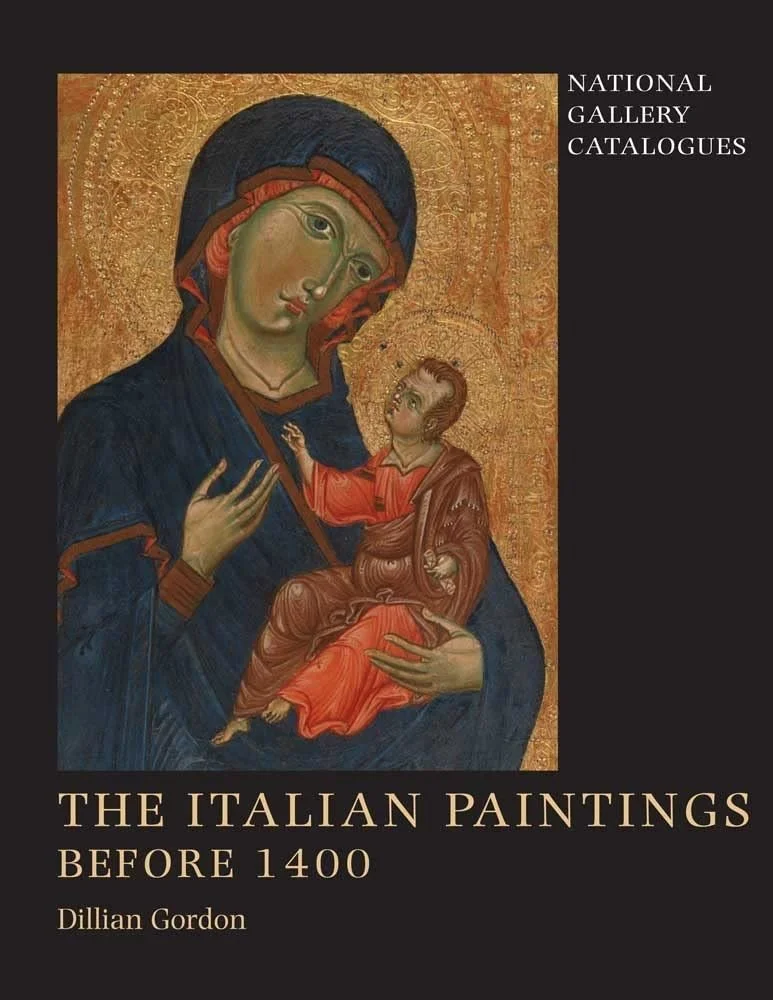
The Italian Paintings Before 1400
by Dillian Gordon
Fondo Oro Magazine:
We believe that the shimmering history of the early Italian masters must be accessible to all who seek the divine in art. Dillian Gordon’s magisterial catalogue of the National Gallery in London is a cornerstone of our "Recommended" list precisely because it documents one of the most vital collections of gold-ground paintings outside of Italy. From the ethereal presence of Duccio to the revolutionary weight of Giotto, this volume captures the very dawn of Western painting. What makes this publication indispensable is its gaze beneath the surface. By utilizing advanced infrared reflectography, Gordon reveals the hidden underdrawings and the technical "secrets" of the bottega. For us, understanding the alchemy of the wood, the gesso, and the gold leaf is just as important as the final image, and this book provides that rare, scientific clarity that honors the craftsmanship of the fourteenth century. To hold this book is to walk through the quiet halls of the National Gallery with the most insightful of guides. It is a work of profound scholarly devotion.
National Gallery Company, London, 2011, 539 pages, Hardcover, ISBN: 9781857094824
The National Gallery in London houses one of the most important collections of early Italian paintings outside Italy, including works by Cimabue, Duccio, Giotto and the di Cione brothers. This completely updated catalogue of the collection is the first published since 1989, and it now includes four exceptional acquisitions from the intervening years: the 13th-century diptych now attributed to the Master of the Borgo Crucifix, The Virgin and Child by Cimabue, The Virgin and Child by the Clarisse Master, and The Coronation of the Virgin by Bernardo Daddi.
For this volume, Dillian Gordon takes into account the substantial body of new research published over the past twenty years to review and in some cases reattribute the works. All but two paintings have been re-examined by the National Gallery's team of curators, conservators, and scientists. Through the use of infrared reflectography, much new information has been revealed regarding the significance of underdrawings and technique. Each work is illustrated in color, and many are accompanied by details and technical and comparative illustrations.