
Resources > Publications
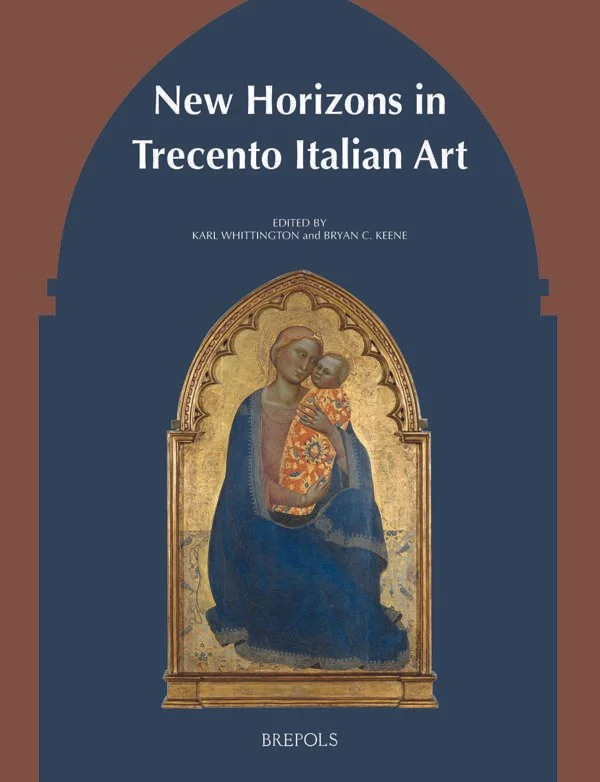
New Horizons in Trecento Italian Art
Mobility and Materiality in the Trecento Mediterranean
by Bryan Keene, Karl Whittington (eds)
Fondo Oro Magazine:
To look upon a gold-ground panel is to see only one facet of a deeply complex world. We recognize that the scholarship surrounding the Trecento must be as luminous and multi-layered as the art itself. New Horizons in Trecento Italian Art, born from the esteemed Andrew Ladis Trecento Conference, represents a vital leap forward in our field. By weaving together fresh perspectives on architecture, politics, and patronage, editors Bryan Keene and Karl Whittington have crafted a volume that honors the legacy of Giotto and Dante while pushing the boundaries of traditional art history.
What earns this work a place in our recommended selection is its profound focus on the "materiality" and "devotion" that define the fourteenth century. It treats the Trecento not as a relic of the past, but as a living landscape of cultural exchange and technical innovation.
For the serious student or the passionate connoisseur, these essays provide a nuanced understanding of how art was both conceived in the workshop and experienced in the cathedral. It is a work of intellectual rigor that truly broadens the horizons of our collective understanding.
BREPOLS, 2021, 320 pages, Hardcover, ISBN: 9782503586182
Subjects
Medieval art history
Renaissance art history
Italian Peninsula (c. 500-1500)
The fourteenth century in Italy, the age of Giotto, Dante, and Boccaccio, widely known as the trecento, was a pivotal moment in art history and in European culture. The studies in this volume present new approaches to art in this important but often neglected period of the late Middle Ages and early Renaissance. Scholars at various stages in their careers discuss a wide range of topics including architecture, cultural exchange, materiality, politics, patronage, and devotion, contributing to a new understanding of how art was made and experienced in this nodal century. These papers were originally presented at the Andrew Ladis Trecento Conference held at the Museum of Fine Arts in Houston in November of 2018.
Table of contents
Some Reflections — Judith Steinhoff
Introduction — Bryan C. Keene and Karl Whittington
I. Matter and Material
Stone, Paint, Flesh: Fictive Porphyry Exteriors in a Group of Multipart Panel Paintings from Angevin Naples — Sarah K. Kozlowski
The Altar as Stage: Visual and Material Conditions of the Dramatized Nativity — Patricia Simons
Jacopo, Niccolò, and Paintings in Books for Santa Maria degli Angeli — George R. Bent
II. Narrative and Response
Painted Wood Caskets for Saints in Trecento Venice — Ana Munk
The Reliquary of the Column of the Flagellation: A Case for Narrative Reliquaries — Claire Jensen
Fragmented Narrative in the Chapter House of San Francesco in Pistoia — Laura Leeker
Seeing and Sensing Compassion: Giotto’s Naturalism in the Arena Chapel and Pietro d’Abano’s Theory of Sympathetic Response — Theresa Flanigan
III. Prototypes: Local and Global
Locating the Duomo of Milan in the European Trecento — Erik Gustafson
The Ilkhanid-Italian Relationship during the Trecento: Medieval Persian Prototypes for Brunelleschi’s Dome in Florence — Lorenzo Vigotti
IV. Art and Identity
A Tribute to Dante: The Giottesque Portrait in the Palazzo del Podestà in Florence — Sonia Chiodo
Visual Representation of Women’s Legal Duties in Medieval Siena — Elena Brizio
V. Time and Knowledge
Towards a New Reading of the Fifteenth-Century Astrological Cycle at the Palazzo della Ragione in Padua — Anna Majeski
Giotto and Time — Luca Palozzi
Diagramming Triumph in Trecento Painting: Augustine and Thomas from Page to Wall — Karl Whittington
VI. Local Sanctities
Art of an Emblematic King: Robert I of Naples as King of Jerusalem in the Fourteenth Century — Cathleen A. Fleck
The Lignum Crucis and the Veneration of the Cross in the contado of Siena: Unmasking Some Neglected Images in the Cathedral of Massa Marittima — Sandra Cardarelli
The Bodies and Blood of Christ and the Virgin at Santa Maria Novella, Florence — Amber McAlister
VII. The Trecento in the Present
Rising from the Rubble of World War II: The High Altarpiece of Impruneta — Cathleen Hoeniger
Engaging with the Trecento — Caroline Campbell
Afterword — William Underwood Eiland