
Resources > Publications
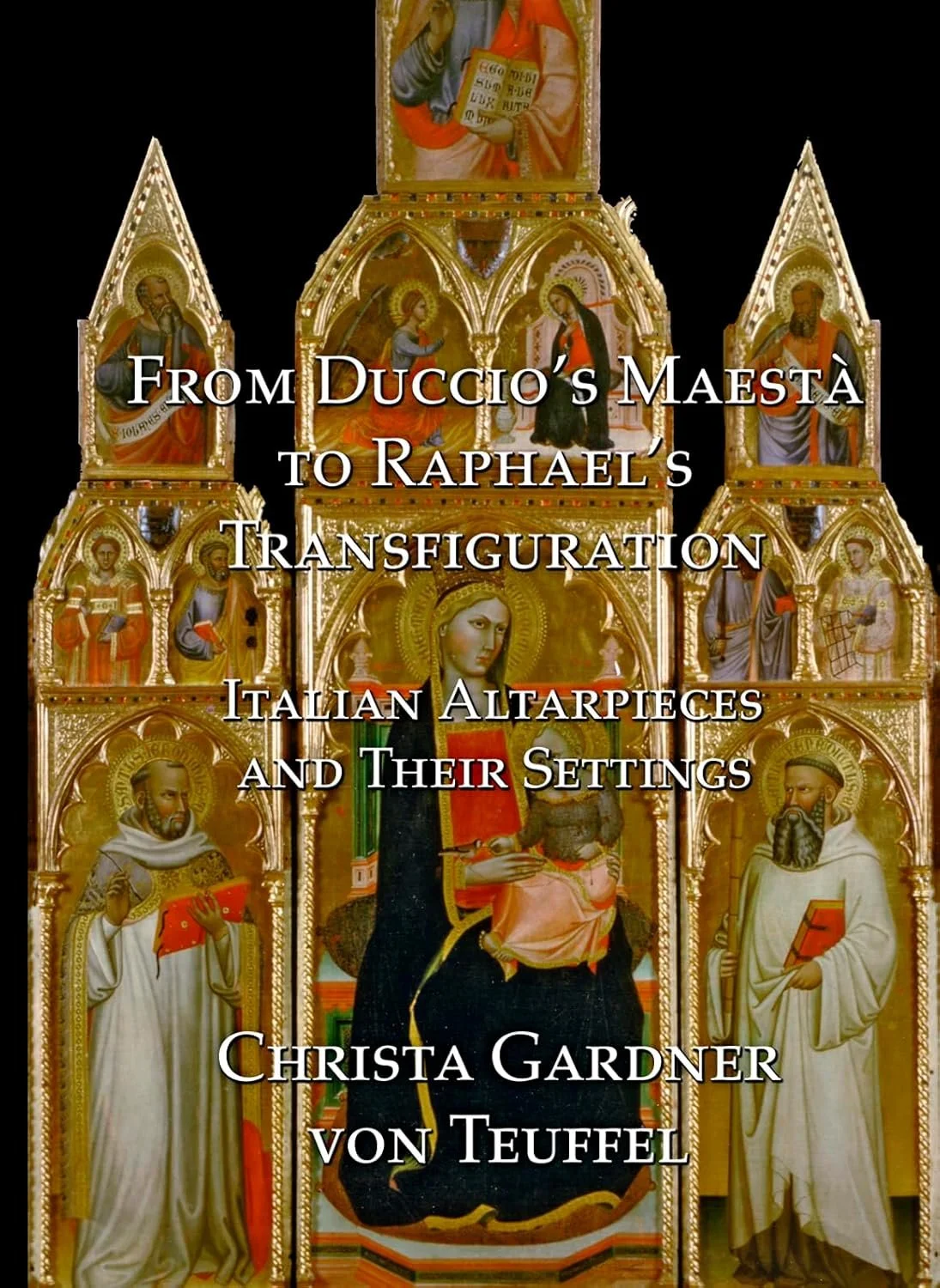
From Duccio's Maesta to Raphael's Transfiguration
Italian Altarpieces and their settings
by Christa Gradner von Teuffel
Fondo Oro Magazine:
Christa Gardner von Teuffel’s From Duccio's Maesta to Raphael's Transfiguration is an indispensable addition to our recommended library because it reconstructs the physical and spiritual settings of the most canonical monuments of late medieval painting. By combining meticulous studies of frame architecture with archival discoveries, she provides the essential "missing half" of our understanding of the altarpiece.
Von Teuffel illuminates how the reform movements of the Benedictine, Franciscan, and Carmelite orders directly influenced the iconographical impact of these golden panels. For the connoisseur, her research transforms these works from isolated museum objects back into the vibrant, functional focal points of worship they once were. To truly appreciate the Trecento and Quattrocento, one must understand the contractual obligations and design processes that governed their birth. This scholarly work offers a rare, pervasive look at how the influence of the Holy Land was traced through the great altarpiece programs of Rome and Tuscany. It is a rigorous and enduring contribution that perfectly aligns with our mission to document the profound depth of Italy’s artistic heritage.
Pindar Press, 2005, 380 pages, Sorfcover, ISBN: 9781904597308
Christa Gardner von Teuffel's studies of Italian altarpieces have provided fundamental insights concerning the original structure and setting of some of the canonical monuments of Italian late medieval and Renaissance painting. Studies of panel type and frame architecture are combined with an investigation of original sites. Archival discoveries at Florence and Palermo have led to a new assessment of institutional patronage and private benefaction, and illuminated the formulation of altarpiece programmes, such as Perugino's Vallombrosan Assumption and Raphael's Lo Spasimo. These essays contribute enduringly to our understanding of contractual obligation, design process and altarpiece installation, and demonstrate the nexus between ecclesiastical and lay patrons, artists and congregations. The author's pioneering examination of Carmelite patronage and subsequent investigation of the iconographical impact of Benedictine and Franciscan reform movements have prompted others to re-assess the patronage of religious Orders in the Quattrocento. The pervasive iconographical influence of the Holy Land is traced through Sansepolcro, Santa Croce in Gerusalemme at Rome and as far as the astonishing View of Sinai by El Greco.