
Resources > Publications
Trecento Pictoriality
Diagrammatic Painting in Late Medieval Italy
by Karl Whittington
Brepols, 2023, 367 pages, Hardback, ISBN: 9781915487049
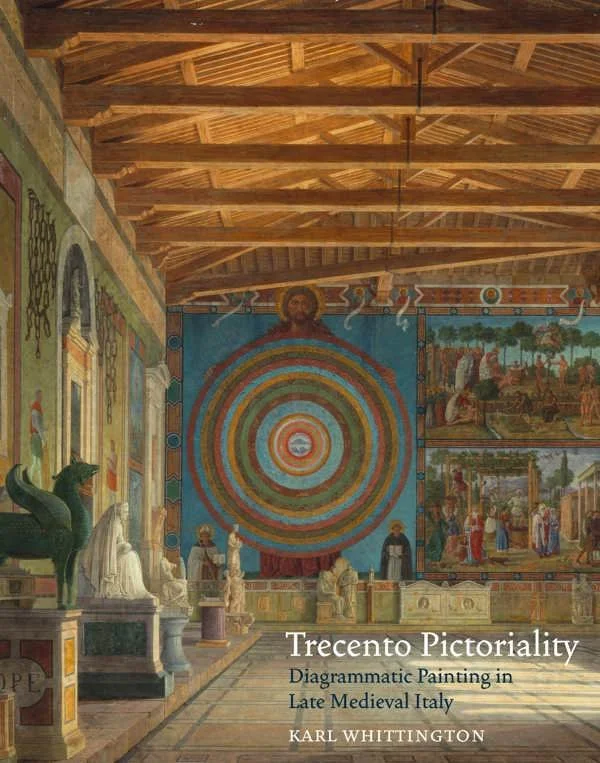
In dozens of monumental examples across central and northern Italy, late-medieval artists created complex diagrammatic paintings whose content was conveyed not through proto-perspectival spaces but rather through complex circles, trees, hierarchical stemmata, and winding pathways. Trecento Pictoriality is the first comprehensive study of the practice of monumental diagrammatic painting in late-medieval Italy, moving the study of diagrams from the manuscript page to the frescoed wall and tempera panel. Often placed alongside narrative, devotional, and allegorical paintings, the diagrammatic mode was one of a number of pictorial modes available to artists, patrons, and planners, with a unique ability to present complex content to viewers. While monumental diagrams may have sparked some of the experiences usually associated with diagrams in manuscripts, acting as machines for thought, scaffolds for memory, or tools for the visualization of complex concepts, their reception was also shaped by their presence in public spaces, their scale and aura as richly decorated works of monumental visual art, and their insertion into larger pictorial programs. Closely examining the visual and communicative strategies of these paintings expands the horizon of trecento art history beyond narrative and devotional painting, and shifts our understanding of all of the arts of the trecento, calling attention to issues of scale, visual rhetoric, pictorial ingenuity, and reception.
TABLE OF CONTENTS
Introduction: Modes of Pictoriality in the Spanish Chapel in Santa Maria Novella
Part I – Reassessing Surface, Space, and Body in Trecento Painting
Undulating Surfaces in Santa Croce: Taddeo Gaddi’s Refectory
Painting the Sculptural Body in Lucca and Florence: Intermedial Croci Dipinte
Part II – Painted Diagrams from Page to Wall
Diagrammatic Visual Culture in Late Medieval Italy
Painting the Cosmos in Pisa, Padua, and San Gimignano
Bonaventure’s Lignum Vitae in Panel, Fresco, and Gold
Diagramming the Triumphs of Augustine and Thomas
Part III – Diagrammatic Painting: Narrative and Allegory
A Morphology of Trecento Lines
Returning to Ambrogio Lorenzetti’s Government Frescoes
Narrative and Allegory in Santa Maria Novella
Conclusion: Diagrams and Authority
Notes
Bibliography
Index